| Commercial Summary: Generally, HiMAXBATT does not derive revenue from its articles; the editorial viewpoints expressed therein are our own and are published independently. We are a manufacturer of lithium batteries. |
Key Takeaways
- Define your riding conditions and vehicle requirements before choosing a battery.
- Match battery voltage to the controller and motor.
- Compare watt-hours and real-world energy consumption to estimate range.
- Check continuous and peak discharge ratings against controller demand.
- Verify charger voltage, current, connector wiring, and compatibility.
- Evaluate fit, protection features, and production consistency before ordering.
Choosing a lithium battery for an electric scooter takes more than comparing capacity and price. From a battery manufacturing perspective, a suitable pack needs to meet the scooter’s voltage, range, power delivery, charging, and installation requirements. A mismatch in any of these areas can affect performance or create safety risks.
For scooter manufacturers, brands, and purchasing teams, battery selection should start with vehicle specifications. Cell configuration, protection systems, and mechanical design come next, followed by sample testing to confirm actual performance.
Start with Your Riding Conditions and Design Goals
Short commutes and longer trips place different demands on energy capacity, weight, and cost. Frequent hill climbing or heavier loads increase the demands on sustained battery output. Buyers should first define the required distance per trip, total load, road grades, operating temperatures, and available charging time.
For a replacement battery, check the scooter’s existing specifications, installation dimensions, and communication requirements. For a new scooter design, the battery compartment, controller, and charging system can be developed together, but design limits should be established early.
Battery manufacturers also need to know whether the scooter will face sustained climbs or frequent starts. The same rated motor power can involve different current and temperature requirements under different operating conditions.
Choosing Battery Voltage: Confirm Compatibility with the Scooter’s Electrical System
Nominal voltage identifies a battery’s voltage class. Fully charged voltage depends on cell chemistry, the number of cells connected in series, and the charging voltage limit of each cell. These values are not interchangeable.
The table below uses common lithium-ion cells with a nominal voltage of approximately 3.6–3.7V and a charging limit of 4.2V per cell:
| Common Voltage Class | Cells in Series | Fully Charged Voltage |
| 36V | 10 | 42V |
| 48V | 13 | 54.6V |
| 52V | 14 | 58.8V |
These configurations do not apply to every lithium battery chemistry. Buyers should use the specific battery’s datasheet rather than assuming that a “48V battery” has a particular charging requirement.
For vehicle compatibility, check the controller’s allowable input voltage, low-voltage cutoff settings, and the motor’s operating range. Scooters with regenerative braking also need charging control verification when the battery is full, so recovered energy does not push battery voltage beyond its allowable limit.
Replacing a 36V battery with a 48V battery involves more than swapping the power source. The voltage change can affect motor speed, controller operation, and dashboard readings. Any upgrade needs vehicle-level validation; higher voltage alone does not establish better performance.
During specification review, the battery manufacturer should confirm the operating voltage range and protection thresholds. Poor coordination between battery and controller low-voltage settings can cause early shutdowns or limit usable energy.
Estimating Range: Understanding Ah, Wh, and Real-World Riding Distance
Amp-hours (Ah) measure charge capacity, while watt-hours (Wh) measure stored energy. When comparing batteries with different voltages, watt-hours provide a more useful basis for comparison. The approximate calculation is:
Nominal Energy (Wh) = Nominal Voltage (V) × Capacity (Ah).
For example, a 36V, 15Ah battery stores approximately 540Wh of nominal energy, while a 48V, 15Ah battery stores approximately 720Wh. Their amp-hour ratings are the same, but their nominal energy differs.
Range can be estimated by dividing usable energy by energy consumption per unit of distance. Assume an evaluated battery configuration provides 600Wh of usable energy:
| Assumed Energy Consumption | Estimated Range |
| 12Wh/km | About 50 km (31 miles) |
| 15Wh/km | About 40 km (25 miles) |
| 20Wh/km | About 30 km (19 miles) |
These figures illustrate the calculation only; they are not range guarantees for a specific scooter. Actual energy consumption requires vehicle testing, and usable energy should not be treated as equal to nominal energy.
Heavier loads, frequent acceleration, steeper grades, and underinflated tires generally increase energy consumption. Cold temperatures, battery aging, and protection settings can also affect usable energy. Buyers should ask suppliers to specify test temperature, speed, load, and discharge cutoff conditions rather than comparing results obtained under different conditions.
Capacity planning should leave room for return trips, detours, and capacity loss over time, while accounting for the effects of added battery weight. Increasing capacity alone can take up more installation space and change how the scooter handles or how easily it can be carried.
Matching Power Requirements: Check Discharge Capability and Controller Current Limits
Motor power alone does not determine the battery specification. The battery’s actual output requirements also depend on controller current limits, system efficiency, operating voltage, and riding conditions.
A preliminary estimate is “current ≈ battery-side input power ÷ operating voltage.” For example, 960W of battery-side input power at an operating voltage of 48V corresponds to approximately 20A. The motor’s stated mechanical output power should not be substituted directly for electrical input power in this calculation.
At roughly the same input power, lower voltage requires more current. Manufacturers therefore need to verify performance at a low state of charge rather than relying only on tests with a fully charged battery.
| Item to Check | What to Confirm |
| Continuous discharge current | Meets sustained riding and hill-climbing demands |
| Peak discharge current | Meets brief demands during starts and acceleration |
| Allowable peak duration | Matches the controller’s operating strategy |
| Temperature rise and voltage sag | Do not trigger protection or compromise required performance under heavy loads |
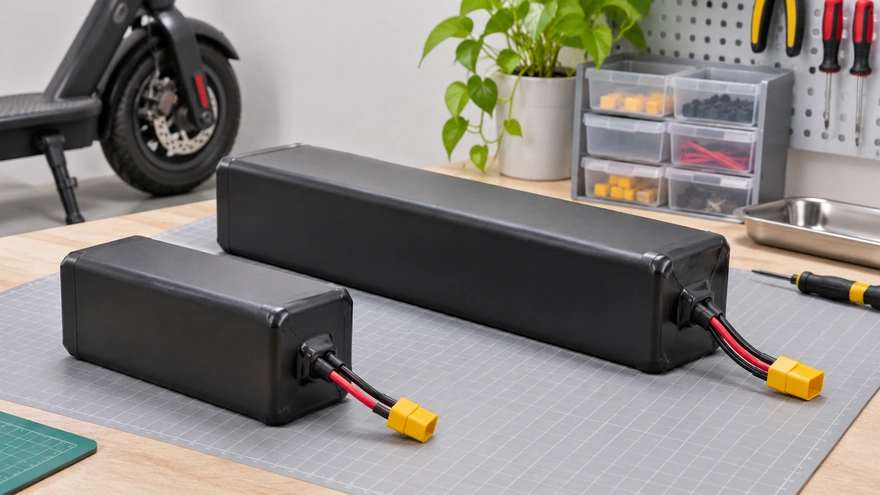
The cells, battery management system (BMS), interconnects, wiring, and connectors all form part of the current path. A high BMS current rating does not establish that the complete pack can sustain the same output. Adding parallel cells also requires appropriate interconnection and thermal design.
Sample testing should cover sustained climbs, repeated starts, and acceleration at a low state of charge. Recording temperature rise, voltage sag, and protection events helps confirm whether the battery supports the intended operating conditions.
Choosing a Charging System: Verify Voltage, Current, and Connectors
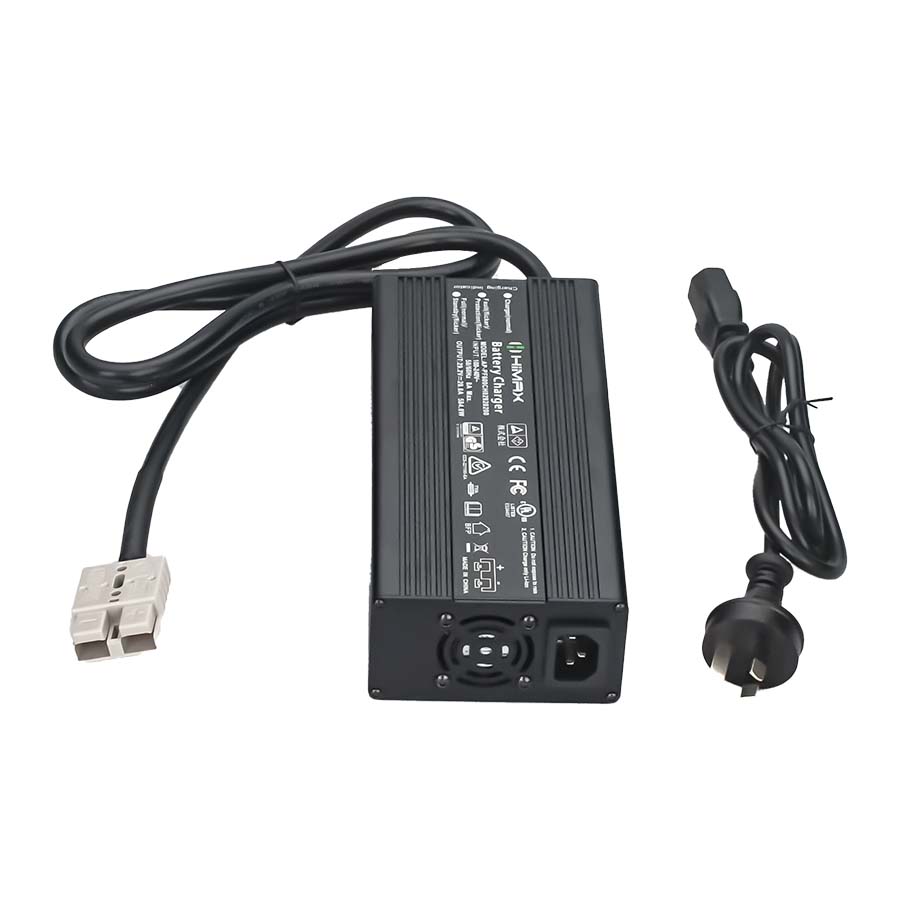
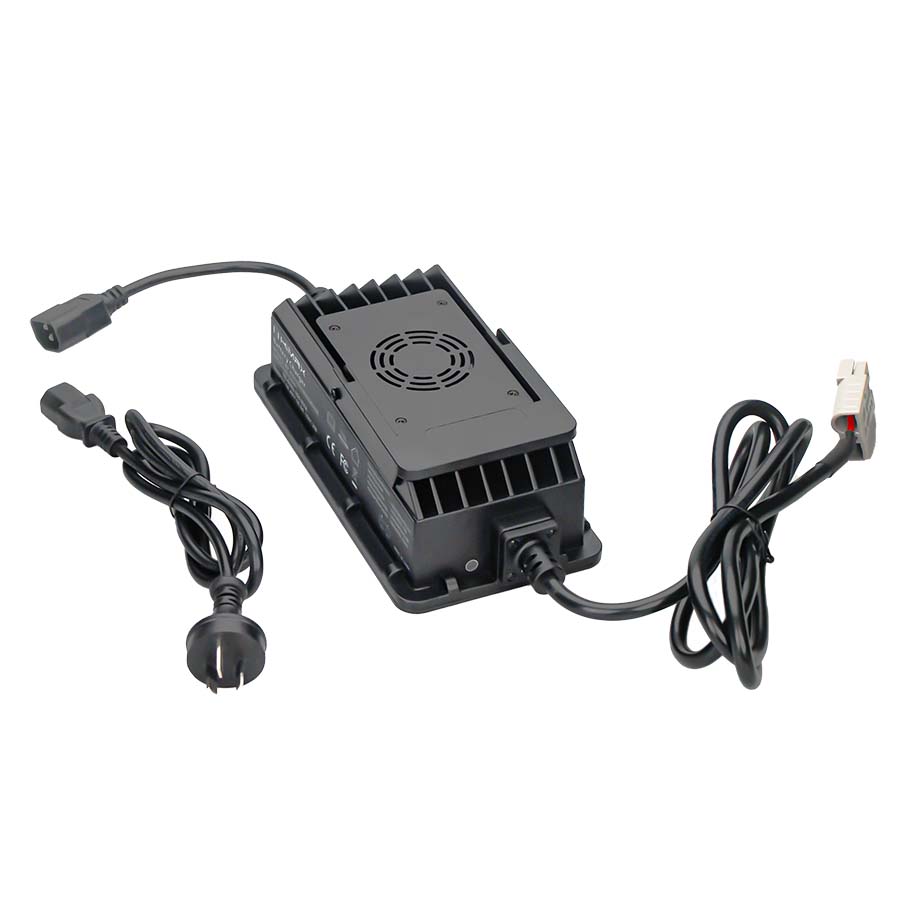
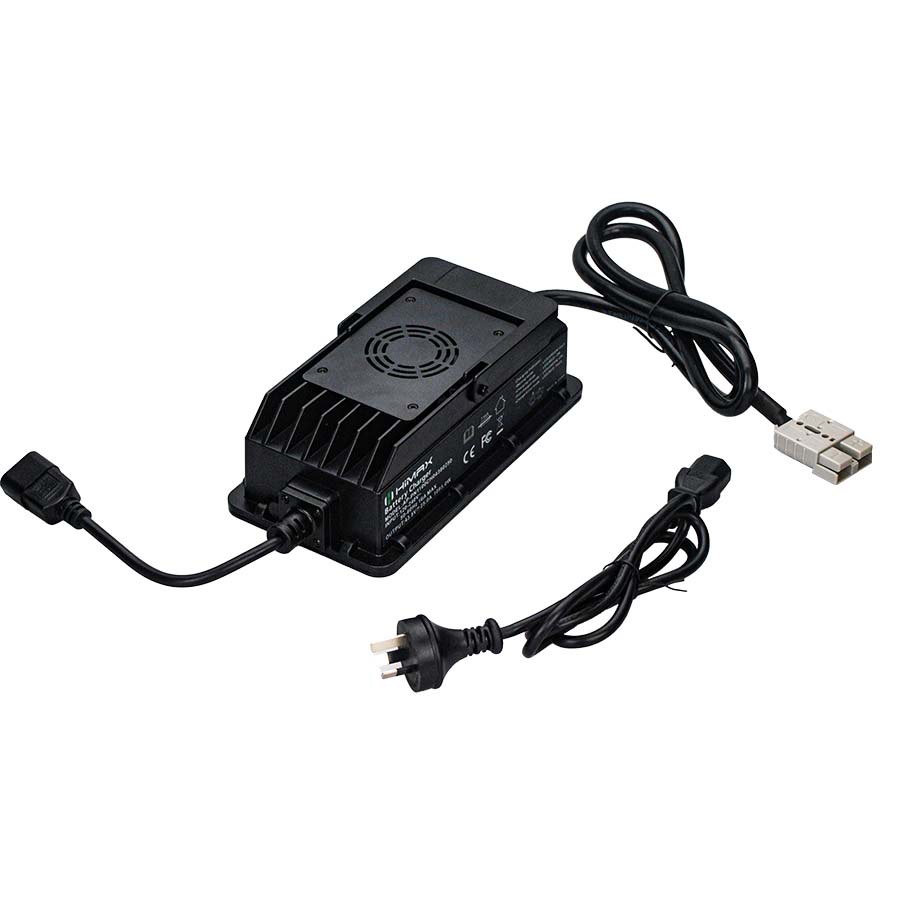
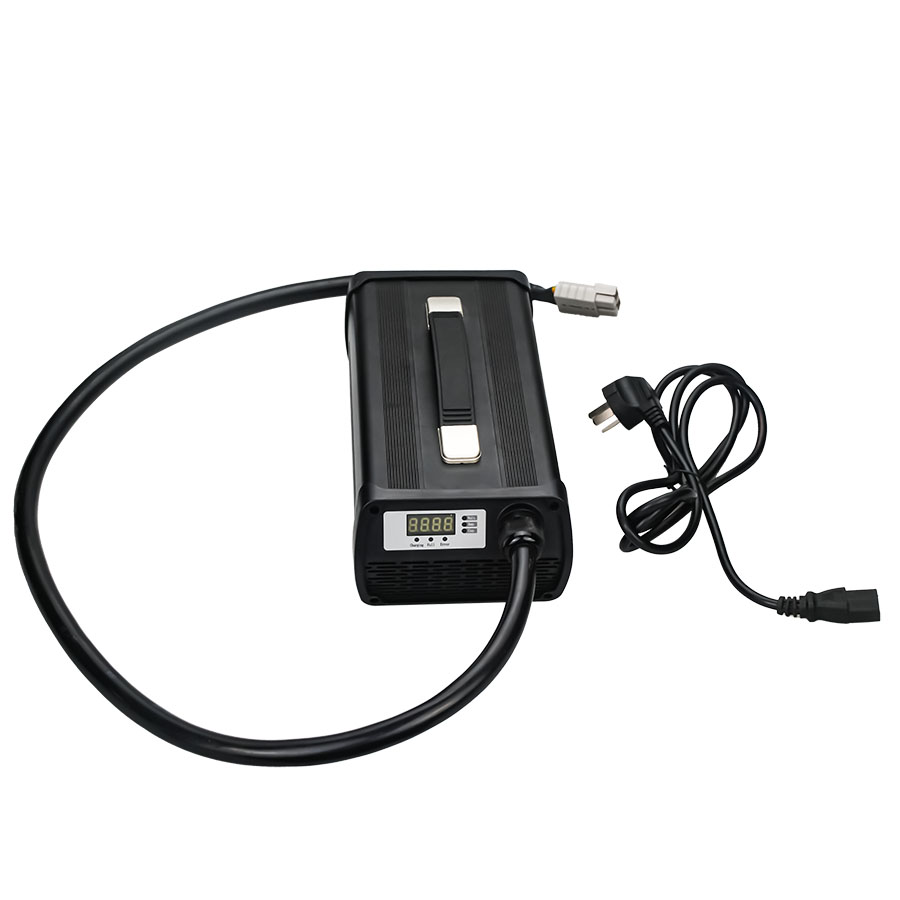
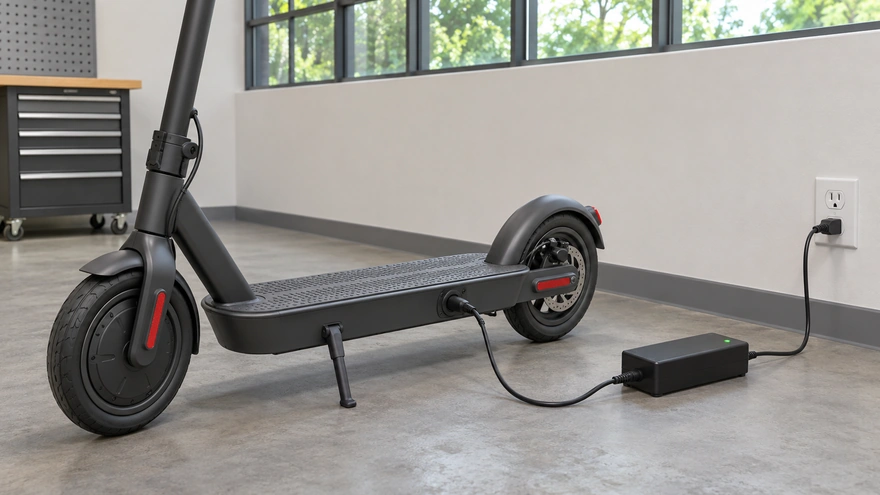
The charger must match the battery chemistry, series configuration, charge cutoff voltage, and allowable charging current. A connector that physically fits does not establish electrical compatibility.
Buyers should also confirm polarity, pin assignments, cable current ratings, and whether communication or temperature-based control is required. Batteries with the same connector style may still use different wiring configurations.
Charging time can be roughly estimated by dividing capacity by charging current. For a 15Ah battery and a 3A charger, this simple calculation gives about five hours. However, lithium-ion charging typically includes a later stage in which current tapers off. Actual charging time also depends on the starting state of charge, temperature, and charging strategy.
Before increasing charging current, confirm that the cells, BMS, charging connector, and thermal design support it. Fast-charging configurations should be tested within the permitted temperature range, with temperature rise and changes in cycle life evaluated.
At low temperatures, follow the charging restrictions in the battery datasheet. BMS protection provides a safeguard against abnormal conditions; normal charging should still rely on a compatible charger and coordinated controls.
Checking Fit and Safety: Mechanical Design Matters
A battery that fits inside the compartment is not necessarily ready for installation. Manufacturers also need to allow space for cable bends, connector access, mounting hardware, and mechanical clearances to prevent compression or cable abrasion after assembly.
Vibration, impacts, and water exposure place demands on mounting, insulation, and sealing. Water resistance needs to be verified for the complete pack, its connectors, and the installed configuration. Housing material alone does not establish water resistance.
The BMS should provide overcharge, overdischarge, overcurrent, short-circuit, and temperature protection appropriate for the design. Temperature sensors should be positioned to reflect thermal conditions at critical locations.
Safety evaluations also need to distinguish between the battery and the complete scooter. UL Solutions’ guide to personal e-mobility testing and certification identifies UL 2271 for batteries used in light electric vehicle applications and UL 2272 for the electrical systems of personal e-mobility devices. Buyers should confirm the requirements for their target market, product classification, and applicable standard edition. Battery-level documentation does not replace evaluation of the complete scooter.
Evaluating Bulk Orders: Sample Validation and Production Consistency
After samples pass testing, buyers still need to confirm that production units use the agreed cell model, construction, BMS configuration, and critical materials. Material substitutions or parameter changes should go through mutual approval and any necessary validation.
Acceptance checks may include capacity under specified conditions, internal resistance, charge and discharge functions, protection behavior, and dimensions. Range testing should use the corresponding scooter under consistent conditions so results can be reproduced.
Delivery records should link battery models and production batches to test results. Buyers should also verify the specific models and configurations covered by certifications or reports, confirm their status, and agree on procedures for defective products and after-sales responsibilities.
HiMAXBATT: Custom Lithium Battery Packs and Integration Support for Electric Scooters
HiMAXBATT is a lithium battery manufacturer. For electric scooter battery projects, share your vehicle specifications and operating requirements with HiMAXBATT to discuss voltage, capacity, discharge capability, and charging system options, then move forward with sample validation.