| Commercial Summary: Generally, HiMAXBATT does not derive revenue from its articles; the editorial viewpoints expressed therein are our own and are published independently. We are a manufacturer of lithium batteries. |

Key Takeaways
- Match battery capacity to lighting loads and required backup time.
- Integrate solar panels, batteries, and charge controls.
- Check voltage, output, operating temperature, and BMS compatibility.
- Include electrical protection, commissioning, and maintenance.
- Evaluate project costs using site-specific operating assumptions.
Commercial LED lighting is used in offices, warehouses, retail spaces, parking lots, campuses, roadways, and outdoor signs. Power requirements vary with operating hours, installation conditions, backup needs, and grid availability. Lithium batteries can provide backup power or store energy generated by solar panels for later use. A suitable system starts with the load, required runtime, operating environment, and maintenance plan. For battery manufacturers, the key is matching the cells and protection system to the application.
Why Commercial LED Lighting Uses Lithium Batteries
LED fixtures are energy efficient, but lighting systems often run for extended periods. If a site needs to keep exit routes, security areas, or critical workspaces lit during an outage, a battery system can supply backup power. Lithium batteries can also store daytime solar generation for nighttime use at sites with limited grid access or high wiring costs.
Different settings place different demands on a battery system:
| Application | Primary Power Need | Design Considerations |
| Offices and retail spaces | Keep selected areas lit during outages | Transfer time, backup runtime, and integration with building electrical systems |
| Warehouses and factories | Light aisles, loading areas, or critical workstations | Fixture wattage, circuit zones, and load startup characteristics |
| Parking lots and campuses | Provide nighttime lighting, sometimes with solar power | Runtime through cloudy weather, outdoor temperatures, and enclosure rating |
| Outdoor signs and remote sites | Operate where grid power is limited | Solar array size, installation space, remote monitoring, and ease of maintenance |
Project teams should identify which fixtures are critical loads and which areas need lighting during an outage. This helps define backup coverage and battery size without including nonessential loads that could increase project costs.
Backup Power for Commercial LED Lighting
A backup power system may include a battery pack, charger, inverter or DC converter, transfer equipment, and protective controls. When grid power is available, the charger replenishes the battery according to its requirements. During an outage, transfer equipment connects designated loads to the battery system. If the fixtures and battery share a compatible DC bus, the design may avoid some conversion steps. AC fixtures generally require an inverter.
Start with a load list that records each fixture group’s rated power, quantity, operating hours, and dimming requirements. Then estimate energy needs based on the target backup time:
Backup energy needed (kWh) = emergency lighting load (kW) × backup runtime (hours)
The battery’s rated capacity must also account for inverter efficiency, wiring losses, permitted depth of discharge, low-temperature performance, and aging. For example, a 1 kW lighting load that must run for three hours uses 3 kWh of energy at the load. The battery’s rated capacity should be adjusted for system efficiency and the battery’s operating window.
The design should also define transfer behavior and load priorities. Some sites only need to keep exit routes and emergency exits lit, while other fixtures can shut off. Warehouses or manufacturing sites may use staged dimming to extend runtime in priority areas. Battery manufacturers can review the load profile and confirm that the battery pack’s output suits the expected temperature, discharge rate, and voltage range.
Integrating Solar Power and Batteries for LED Lighting
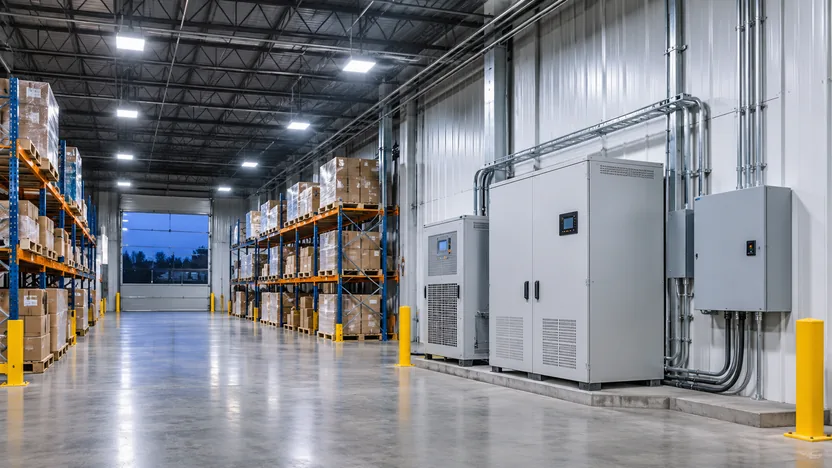
A solar lighting system typically includes PV modules, a charge controller, a lithium battery, LED fixtures, and control equipment. During the day, the modules generate electricity. The controller manages charging according to the battery’s parameters, and the battery powers the fixtures at night. A system may also connect to the grid for supplemental charging when solar generation is insufficient.
The U.S. Department of Energy’s guide, Solar Photovoltaic System Design Basics, explains that PV systems can power building loads such as lighting, while batteries store solar energy for use at night or when sunlight is limited. Actual system sizing should reflect local sunlight, shading, and seasonal conditions rather than clear-sky output alone.
Key design variables include daily energy use, average PV generation, battery runtime, and installation conditions. Designers should use solar resource data for the project location and account for panel tilt, orientation, shading, soiling, and wiring losses. If the system must provide lighting through several cloudy days, the design may need more storage or a backup source. Dimming schedules, occupancy sensors, and zone controls can also reduce energy use during low-traffic periods.
The PV system and battery must be matched for voltage and charging parameters. Lithium batteries require charging settings suited to their cell chemistry. The battery manufacturer should provide charging voltage and current limits, low-temperature charging restrictions, and communication requirements. The system integrator should confirm that the controller can follow those specifications.
Choosing a Lithium Battery for Commercial LED Lighting
Battery selection starts with system voltage, usable energy, continuous output power, and operating conditions. The system voltage must work with the fixtures, inverter, and controller. Battery capacity should reflect the energy requirement, while continuous output capability should cover the load when fixtures operate together. If the fixtures have startup current or other short-term load changes, designers should also check peak output and protective-device ratings.
Cell chemistry should be selected based on installation space, temperature range, cycling conditions, cost targets, and certification requirements. Lithium iron phosphate batteries are used in some stationary storage applications, but project teams should review the product’s voltage range, low-temperature charging strategy, system integration requirements, and pack design. Performance should be judged using the manufacturer’s specifications and test conditions for the specific product.
A selection document should list rated voltage, rated capacity, usable energy, maximum continuous charge and discharge current, operating temperature, cycle-life test conditions, protection features, and communication interfaces. Cycle-life figures should include temperature, depth of discharge, charge and discharge rates, and the end-of-life capacity threshold. Without these conditions, comparing figures across products can be misleading.
Designing the Storage System: Loads, Runtime, and Charging Strategy
System design starts with the lighting loads. Project teams should record fixture count, wattage per fixture, daily operating hours, dimming periods, and the share of emergency loads. For sites with multiple zones, separate standard lighting, emergency lighting, and loads that can be delayed or shed. These details inform battery energy, inverter power, charging power, and distribution design.
Rated battery energy and usable energy are different. The system needs an operating reserve and must account for inverter losses and the battery system’s own power use. A preliminary estimate can use:
Approximate rated battery energy = load energy ÷ (system efficiency × usable discharge fraction)
For example, if the load needs 3 kWh, system efficiency is 90%, and the design uses 80% of the battery’s rated energy, the preliminary rated capacity is about 4.17 kWh. This estimate does not include adjustments for low temperatures, aging, or design reserve, so the project team should verify it against actual operating conditions.
Charging and discharging strategy affects system operation and battery life. A backup battery may need to retain enough charge for emergencies when grid power is available. A solar system needs to balance daytime charging with nighttime use. Project teams can set a minimum state of charge, charging priority, low-battery dimming, and load-shedding thresholds. Battery University’s guide, BU-501: Basics About Discharging, notes that depth of discharge is related to cycle life. Actual service life also depends on the cell model, temperature, discharge rate, and the manufacturer’s test conditions.
Battery Management and Electrical Safety
A battery management system (BMS) monitors cell voltage, temperature, and current and provides protection when conditions fall outside set limits. Depending on the design, it may also support cell balancing, state-of-charge estimates, fault alerts, and communication with an inverter or controller. The battery manufacturer should specify protection thresholds, communication protocols, and fault responses. The system integrator should verify signal definitions and interlocks between devices.
A BMS is only one part of a safe design. Engineers should also check fuses, breakers, cable sizing, grounding, short-circuit protection, installation clearances, and heat dissipation. Outdoor installations may need protection against moisture, condensation, salt spray, and dust. Batteries should be installed in locations that meet product requirements and allow inspection and replacement.
The International Electrotechnical Commission’s IEC 63056:2020 Safety Requirements for Secondary Lithium Cells and Batteries Used in Energy Storage Systems covers product safety requirements and tests for these batteries. Buyers should confirm which standards and certifications apply to the target market and project type. Compliance with one standard does not automatically establish that the complete lighting system meets every electrical or building requirement.
Installation, Commissioning, and Maintenance
Before installation, the project team should verify voltage and communication compatibility among the battery, inverter, charge controller, and fixtures. Installers should mount the battery, connect cables, fit protective devices, and check polarity and terminal tightness according to the manufacturer’s instructions. Outdoor systems also need appropriate weather protection, ventilation, and shading. Batteries should not remain in temperatures outside their specified operating range.
During commissioning, the integrator should test grid transfer, solar charging, low-battery alerts, load shedding, and fault protection. For backup lighting, an outage test can confirm that critical fixtures start according to the configured logic. The team should record transfer behavior and actual runtime. For solar systems, commissioning should check daytime charging, nighttime discharge, and operation during periods of low sunlight.
A maintenance plan can include reviewing alerts, checking terminals and enclosures, monitoring ambient temperature, and performing functional tests as recommended by the manufacturer. If a battery overheats, swells, develops an unusual odor or leak, or generates repeated alerts, the affected equipment should be taken out of service and inspected by qualified personnel. Maintenance records can help identify capacity changes or growing loads and inform adjustments to the lighting strategy or component replacement.
HiMAXBATT: Lithium Battery Support for Commercial LED Lighting
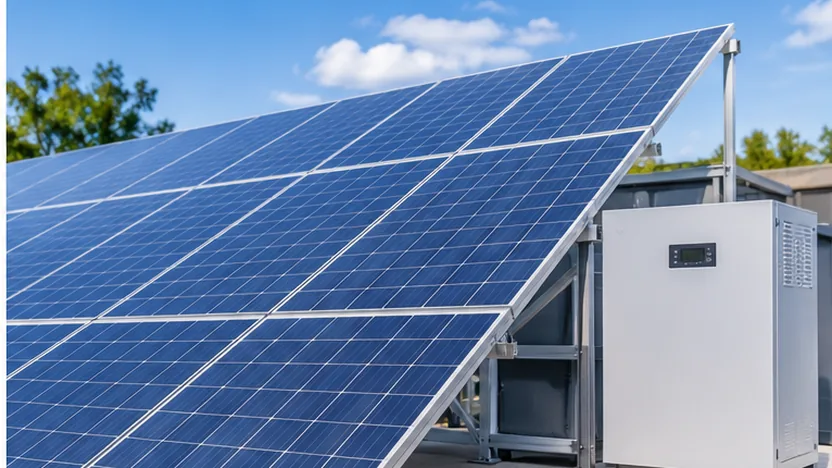
HiMAXBATT is a professional lithium battery manufacturer that supports commercial LED lighting projects with battery products and customized solutions. We can help assess battery capacity, voltage, output capability, and BMS configuration based on a project’s backup runtime, solar charging conditions, lighting load, and installation environment. This helps customers move toward a suitable battery and lighting system match. The final solution depends on project parameters and sample validation.