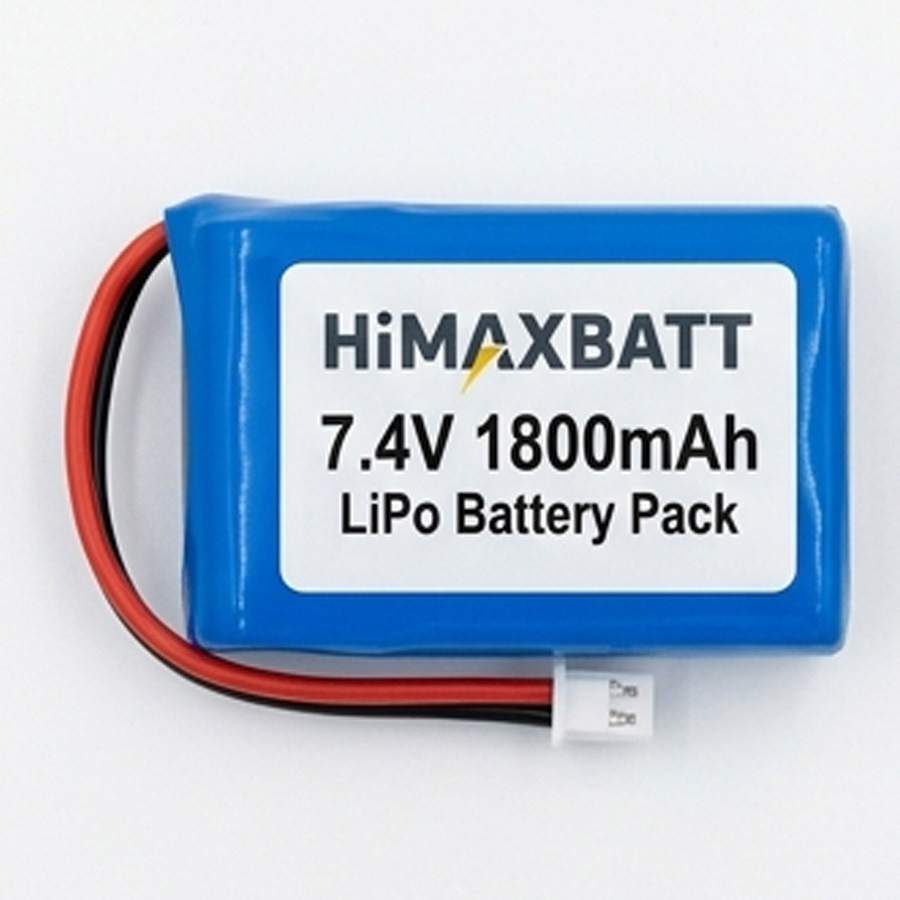
Commercial Disclosure: The HiMAXBATT Editorial Team brings together expertise in lithium battery manufacturing, battery engineering, power systems, and global application support to provide practical, technically informed content for businesses and industry professionals. Our content covers lithium-ion and LiFePO4 batteries, custom battery packs, BMS technology, charging solutions, battery selection, industrial applications, product updates, and HiMAXBATT news. All content reflects HiMAXBATT’s official editorial perspective and our commitment to delivering safe, reliable, and application-focused lithium battery solutions to customers worldwide.
Key Takeaways
- When choosing a battery for outdoor picnic heating, check power requirements, battery energy, low-temperature performance, and connector specifications together rather than looking only at the capacity rating.
- Personal heating devices such as electric blankets and heated seat cushions are generally easier to manage in terms of energy consumption than electric heaters that continuously warm the surrounding air.
- A battery’s rated energy is not the same as the energy actually available in cold conditions. Runtime estimates should account for low-temperature effects, conversion losses, and auxiliary power consumption.
- Lithium batteries may have different charging and discharging temperature ranges. A battery that can provide power at low temperatures may not necessarily be charged safely at the same temperature.
- LiFePO4 and ternary lithium batteries each have suitable applications. Selection should be based on model-specific test data, protection features, and portability requirements.
- Heating loads should include an energy reserve, with additional battery capacity set aside for phones, lighting, and other essential devices.
Introduction
When heading outdoors for a winter picnic, hot drinks, wind protection, and warm clothing can make a significant difference in comfort. If you also plan to use an electric blanket, heated seat cushion, or portable electric heater, having a properly matched battery power system becomes especially important.
From a battery manufacturing perspective, selecting a winter outdoor power solution involves the cells, battery management system, mechanical design, and output circuitry. Before choosing a battery, there are three key questions to answer: Can the equipment start and operate properly? How long will it run in cold conditions? Can the system provide appropriate protection if something goes wrong?
The following sections explain how to choose a battery for winter picnics based on the actual sequence of use.
Choose Your Heating Method Before Choosing the Battery
Outdoor environments continuously lose heat, and wind speed can significantly affect heating performance. If only a few people are sitting together for a picnic, personal heating devices placed close to the body are generally easier to manage in terms of energy consumption. Electric space heaters, by comparison, require sustained high power, increasing both battery-capacity and inverter requirements.
The following hypothetical power ratings illustrate the differences in energy consumption between several types of equipment. These values are for calculation examples only and do not represent the specifications of all products.
| Electrical Device | Assumed Average Power | Operating Time | Device-Side Energy Consumption | Key Selection Considerations |
| Heated seat cushion | 25W | 4 hours | 100Wh | Connector voltage, temperature-control method |
| Electric blanket | 60W | 4 hours | 240Wh | Heat settings, actual average power |
| Two electric blankets | 120W total | 4 hours | 480Wh | Total power, number of available ports |
| Portable electric heater | 800W | 2 hours | 1,600Wh | Continuous output capability, battery energy |
| LED light | 10W | 4 hours | 40Wh | Include with heating loads when calculating total energy |

The basic relationship is:
Energy Consumption (Wh) = Average Power (W) × Operating Time (h)
An electric blanket with thermostatic control may cycle on and off, so its actual average power can vary depending on the heat setting, ambient temperature, and insulation conditions. If measured data is unavailable, using the nameplate-rated power for preliminary calculations can help reduce the risk of underestimating energy requirements.
It is also important to distinguish between two parameters: use average power to estimate runtime, and use the maximum expected simultaneous operating power and startup requirements to verify output capability.
How Should You Evaluate Battery Capacity for Outdoor Heating? Start With Wh
When shopping for batteries, you will often see Ah, mAh, and Wh. When comparing batteries with different voltages, directly comparing Ah or mAh can be misleading.
- Ah and mAhindicate charge capacity and need to be considered together with nominal voltage.
- Whindicates energy and is more useful for estimating how long a battery can power heating equipment.
The conversion is:
Nominal Energy (Wh) = Nominal Voltage (V) × Capacity (Ah)
For example, a battery rated at 12.8V and 50Ah has a nominal energy of 640Wh. However, this does not mean it can reliably operate a 640W device for exactly one hour. Low temperatures, discharge cutoff conditions, and losses in the power-delivery path also need to be considered.
What Is the Difference Between a Battery Pack and a Portable Power Station?
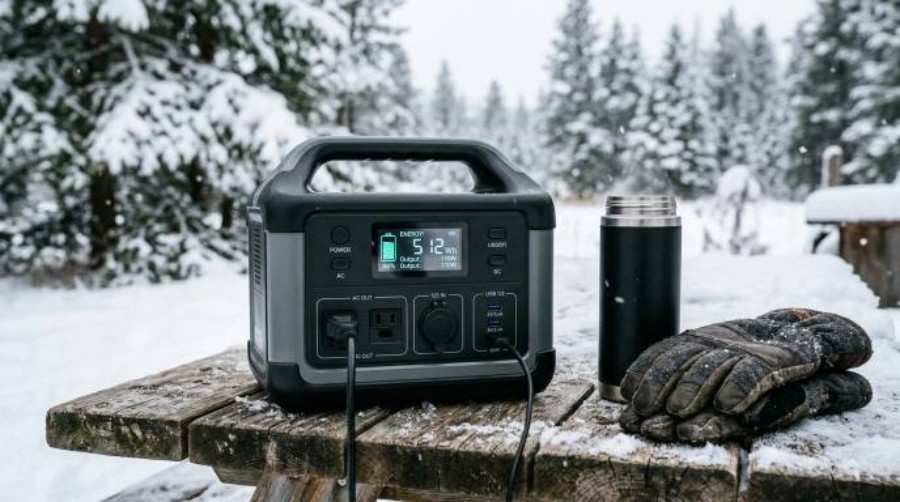
A battery pack primarily stores energy. A portable power station with an AC outlet also includes an inverter, output ports, and control circuitry.
If you are using a household AC electric blanket, you need a compatible AC output. A standalone 12V battery cannot directly power a 220V device. For general consumers, a complete system with compatible ports, charger, and built-in protection may be the more practical option. If a standalone battery pack is purchased, system integration should be performed by personnel with the appropriate technical expertise.
How Do You Calculate Battery Runtime for Winter Picnic Heating?
A simplified calculation can be used:
Runtime ≈ Nominal Energy × Usable Energy Ratio × Conversion Efficiency ÷ Total Average Device Power
The “usable energy ratio” should account for low-temperature effects, the permitted discharge range, and battery condition. It is not a fixed constant, and data from one battery model should not automatically be applied to another.
Suppose a picnic requires:
- One electric blanket with an average power of 60W;
- One 10W light;
- Four hours of continuous use.
The required device-side energy is:
(60 + 10) × 4 = 280Wh
For calculation purposes only, assume the usable energy ratio at the target temperature is 80% and the power-conversion efficiency is 90%. The required nominal battery energy would be approximately:
280 ÷ (0.8 × 0.9) ≈ 389Wh
If an additional 20% planning margin is included:
389 × 1.2 ≈ 467Wh
Based on these assumptions, products around 500Wh could be used as a starting point for evaluation. Whether they actually meet the requirement still depends on model-specific low-temperature data and additional loads such as phone charging, inverter standby consumption, and battery self-heating.
The 80%, 90%, and 20% figures above are calculation assumptions only. They are not universal industry parameters or runtime claims for any particular brand. If a manufacturer provides measured output energy at the required temperature and output interface, that data should be prioritized to avoid applying the same losses twice.
Why Does Cold Weather Affect Battery Performance?
Low temperatures affect ion transport and electrochemical reactions inside a battery. Common effects include reduced usable capacity, increased internal resistance, and greater voltage sag under load. High-power devices may therefore trigger low-voltage protection earlier than expected.
From a manufacturing and testing perspective, a claim that a battery “supports low-temperature operation” also needs supporting conditions. For example, successfully discharging a battery at a relatively low current at a certain temperature does not necessarily mean it can continuously power a high-wattage heater at the same temperature.
When speaking with a supplier, consider requesting the following information:
| Item to Verify | Information to Request | Why It Matters in Actual Use |
| Discharge temperature range | Corresponding current, power, and duration | Determines whether the battery can power the heating equipment |
| Low-temperature capacity data | Test temperature, discharge rate, cutoff voltage | Helps estimate usable winter energy |
| Charging temperature range | Permitted cell temperature and charging-current limits | Helps plan outdoor recharging |
| Temperature-protection logic | Conditions for stopping and resuming charge/discharge | Explains system behavior after protection is triggered |
| Self-heating function | Activation conditions, energy source, heating power | Helps estimate warm-up time and additional energy consumption |
| Test reports | Applicable model, test conditions, scope of report | Helps verify whether marketing claims match the actual product |
LiFePO4 vs. Ternary Lithium Batteries: How Should You Choose?
LiFePO4 batteries and ternary lithium batteries are both types of lithium-ion batteries. In common product designs, LiFePO4 is often selected for applications that prioritize cycle life and thermal stability, while ternary lithium chemistries generally offer advantages in energy density. Actual performance, however, also depends on the specific cell model, pack design, and operating conditions.
| Comparison | LiFePO4 Battery | Ternary Lithium Battery |
| Weight and size | Typically requires more weight or space for the same amount of energy | Typically offers advantages when reducing weight for the same energy is important |
| Cycle use | Commonly used where cycle life is an important consideration | Should be evaluated using model-specific cycle-test conditions |
| Cold-weather performance | Low-temperature capacity, power, and charging limits should be verified | Model-specific low-temperature data should also be verified |
| System protection | Requires electrical and temperature protection | Also requires electrical and temperature protection |
| Picnic-use considerations | Worth considering for frequent use and vehicle-based transport | Worth considering when carrying weight is a major concern |
Battery chemistry alone should not be used to determine which battery is better suited to cold weather. For outdoor heating applications, usable energy at the target temperature, continuous output power, and the protection strategy provide more directly relevant information.
Being Able to Discharge at Low Temperatures Does Not Mean the Battery Can Be Charged at the Same Temperature
When using a lithium battery in winter, check the charging and discharging temperature ranges separately. For many conventional lithium-ion batteries, charging below the permitted temperature may cause lithium plating, which can reduce battery life and create safety risks.
When recharging during a winter picnic:
- Follow the cell-temperature conditions specified in the product manual rather than relying on how cold the battery feels to the touch.
- If low-temperature charging protection is triggered, do not bypass the protection system to force the battery to charge.
- For products with self-heating, verify whether the heating function depends on an external power source and how charging resumes after preheating is complete.
- After moving the battery from a cold outdoor environment into a warm indoor space, inspect the connectors for condensation and wait until temperature and dryness conditions meet the manufacturer’s requirements.
The fact that a solar panel is generating power does not mean the battery is currently able to accept a charge. Recharging is still subject to battery temperature and the charging-management system.
What Else Should You Check Besides Battery Capacity?
Continuous Output Power
If a heater operates at 800W, the power source must provide a matching continuous output. Peak power intended for short startup events cannot replace the continuous-power rating. You should also verify whether the output is derated at low temperatures.
Connectors, Voltage, and Cables
When using DC heating equipment, check the voltage range, polarity, per-port current limit, and connector specifications. USB-C devices may also require a specific power-delivery protocol.
DC power can potentially eliminate one stage of power conversion, but only when the electrical specifications are compatible. A plug that physically fits does not necessarily mean the device is electrically compatible.
BMS Functions
BMS stands for battery management system. When selecting a battery, verify specific protection functions such as overcharge, over-discharge, overcurrent, short-circuit, and temperature protection. A product labeled “with BMS” does not necessarily include low-temperature charging protection.
Moisture Protection and Placement
Dew on grass, rain, snow, and spilled drinks can all affect electrical equipment. Check the protection requirements for both the complete unit and its connectors while in use, and place the power source in a dry, stable location.
Do not wrap an entire portable power station in a thick blanket to keep it warm, as this may block ventilation and heat-dissipation paths. Batteries should also be kept away from open flames and high-temperature heat sources.
Battery-powered heating should not replace appropriate clothing and protection from the environment. If combustion-based heating equipment is used, follow the relevant safety requirements. Do not use charcoal stoves or combustion-based camping heaters in enclosed spaces such as tents where carbon monoxide can accumulate.
FAQ: Common Questions About Batteries for Cold-Weather Outdoor Heating
How Long Can a 500Wh Battery Run an Electric Blanket?
If an electric blanket averages 60W, and we assume an 80% usable energy ratio and 90% conversion efficiency, the estimated runtime is approximately six hours. This estimate does not separately account for self-heating, standby consumption, or other devices. Actual runtime should be evaluated using product-specific data and real operating conditions.
Can a 1000Wh Portable Power Station Run a 1000W Electric Heater?
Both power and energy requirements need to be satisfied. First, verify that the power station can continuously output 1000W. Second, even if losses are ignored, 1000Wh corresponds to only about one hour of operation at 1000W. Low temperatures and conversion losses will generally reduce runtime further.
Can a LiFePO4 Battery Be Used at 14°F (-10°C)?
Some models allow discharge at this temperature, but available power and usable capacity may change. Check the discharge-temperature range and test data for the specific model. The ability to discharge at 14°F (-10°C) does not mean the battery can also be charged at that temperature.
Does a Self-Heating Function Make a Battery Suitable for Every Winter Environment?
A self-heating function alone is not enough to determine suitability. You also need to understand the supported ambient-temperature range, heating-energy source, activation conditions, and warm-up time. If the battery powers its own heater, that energy consumption should also be included in the runtime calculation.
Why Does My Heating Device Suddenly Stop Even Though the Battery Still Shows Remaining Charge?
Possible causes include low-temperature voltage sag, output overload, connector current limits, or temperature protection. Check the fault indication first and follow the manufacturer’s instructions. Do not repeatedly force the system to restart or bypass its protection circuitry.
How Can I Extend Heating Runtime During a Winter Picnic?
Start by reducing heat loss before increasing electrical consumption. Use wind protection and ground insulation, choose personal heating devices when appropriate, use suitable heat settings, and reduce unnecessary electrical loads. Fully charge the battery according to the manufacturer’s instructions before leaving, while reserving enough energy for lighting and communications.
HiMAXBATT Batteries: Selecting a Solution Based on Real Operating Conditions
HiMAXBATT is a lithium battery manufacturer. For cold-weather outdoor picnic heating applications, you can provide HiMAXBATT with your equipment voltage, operating power, planned runtime, ambient temperature, and size and weight constraints to discuss relevant battery specifications and compatibility requirements. Battery selection should be evaluated using model-specific low-temperature performance, BMS protection functions, and test data so that the battery solution is properly matched to the actual application.