| Commercial Summary: Generally, HiMAXBATT does not derive revenue from its articles; the editorial viewpoints expressed therein are our own and are published independently. We are a manufacturer of lithium batteries. |
Key Takeaways
- Water Damage Risks: Water entering a battery pack can cause short circuits, insulation failure, BMS malfunctions, and corrosion.
- Warning Signs: Swelling, overheating, unusual odors, corroded terminals, power interruptions, and fault alerts may indicate water damage.
- Immediate Response: Stop using the battery, avoid recharging it, and disconnect power only when it is safe to do so.
- Battery Reuse: A battery that looks normal or works after drying may still have hidden internal damage.
- Prevention: Proper IP ratings, reliable seals, waterproof connectors, and routine inspections help reduce water intrusion risks.
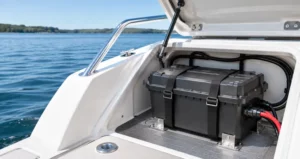
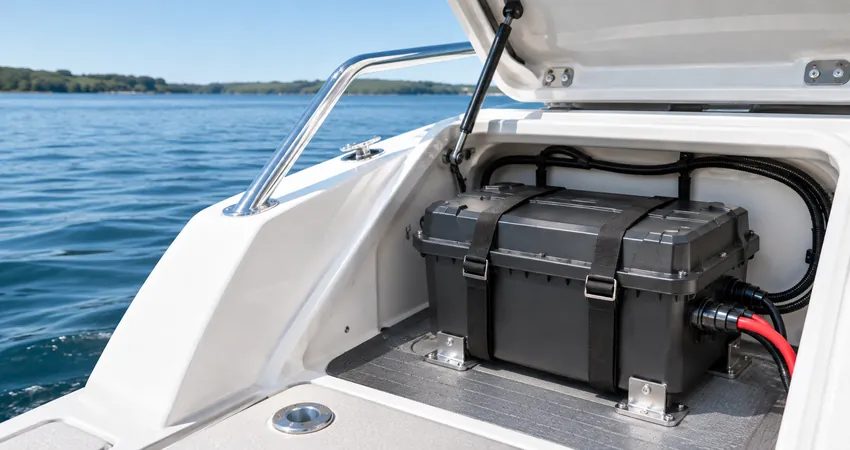
Marine lithium batteries are widely used in electric boats, trolling motors, marine navigation equipment, and auxiliary power systems. However, boats operate in environments with constant moisture, salt spray, and water exposure. Batteries may come into contact with water due to splashing waves, flooding in battery compartments, or deteriorating seals. Once water enters a battery pack, it can cause electrical short circuits, metal corrosion, insulation failure, and potentially serious safety hazards.
So, what happens when a marine lithium battery gets wet? How can you recognize the warning signs? And can a water-damaged battery still be used? This guide examines water-related battery damage, emergency response procedures, and preventive measures from a battery manufacturing and safety engineering perspective. It aims to help boat owners, marine equipment manufacturers, and battery buyers reduce electrical safety risks.
Why Are Marine Lithium Batteries Vulnerable to Water Intrusion?
Compared with batteries used in indoor energy storage systems, marine lithium batteries face more challenging environmental conditions. While a boat is underway, splashing waves, heavy rain, and deck washing can expose battery enclosures to water. Poor drainage or leaks in the hull may also cause batteries to become partially or completely submerged.
Temperature fluctuations between day and night can also cause condensation inside boat compartments. Prolonged exposure to moisture and salt deposits increases the risk of terminal corrosion and deterioration of electrical connections.
From a battery manufacturing perspective, enclosure seams, cable entry points, connectors, and sealing gaskets are particularly important. If these components do not provide adequate protection, moisture may gradually enter the battery pack.
What Happens When Water Enters a Marine Lithium Battery?
The extent of water damage depends on whether moisture penetrates the battery enclosure, which electrical components are exposed, and whether the battery is operating when water intrusion occurs.
Brief contact with water does not necessarily mean moisture has entered the battery pack. However, once water penetrates the protective seals, several problems may develop.
Electrical Short Circuits and Insulation Failure
When water reaches internal circuit boards, electrical terminals, or conductive components, it can create unintended electrical pathways. This may result in leakage currents, localized short circuits, or reduced insulation resistance.
Short circuits can cause localized overheating and damage electrical wiring. In severe cases, they may also lead to electrical arcing or fire.
Even if the battery continues supplying power normally, trapped moisture may gradually compromise its electrical insulation.
Metal Corrosion and Damaged Connections
Marine battery packs commonly contain copper, aluminum, nickel, and other conductive metals. When moisture enters the enclosure, it can accelerate corrosion, increase electrical resistance, and damage connections.
Seawater contains dissolved salts and generally has higher electrical conductivity than freshwater. As a result, seawater exposure can increase the risk of electrical faults and electrochemical corrosion.
| Comparison | Freshwater Exposure | Seawater Exposure |
| Electrical Conductivity | Depends on dissolved impurities | Generally higher |
| Corrosion Risk | May cause metal corrosion | Salt can accelerate corrosion |
| Residual Effects | May leave mineral deposits or impurities | Salt residue can continue absorbing moisture |
| Recommended Action | Stop using the battery and seek professional evaluation | Stop using the battery and seek professional evaluation |
BMS Malfunctions and Protection System Failures
A Battery Management System (BMS) monitors battery voltage, current, temperature, and certain fault conditions.
If moisture reaches the BMS circuit board, it may cause inaccurate sensor readings, communication failures, or damage to protective circuitry.
Some BMS designs can detect overcurrent and short-circuit conditions. However, their effectiveness depends on the specific system design. A BMS should not be considered a guarantee of safety after water enters a battery pack.
Overheating, Thermal Runaway, and Fire Hazards
If water intrusion causes a sustained short circuit, localized overheating, or another serious electrical fault, the battery may experience thermal runaway.
Thermal runaway can involve extreme temperatures, the release of flammable gases, and potentially fire.
However, water entering a battery pack does not automatically mean individual battery cells will experience thermal runaway. The actual risk depends on cell sealing integrity, battery chemistry, the location of the fault, and the condition of the protection system.
How to Spot Water Damage in Marine Lithium Batteries?
Signs of water damage may appear immediately after exposure or develop gradually over time.
Boat owners and equipment operators should watch for the following warning signs. However, they should never repeatedly charge or discharge a suspected water-damaged battery to test whether it still works.
| Warning Sign | Possible Problem |
| Swollen or deformed battery enclosure | Internal gas buildup, overheating, or structural damage |
| Unusual heat, smoke, or odors | Electrical faults or severe thermal problems |
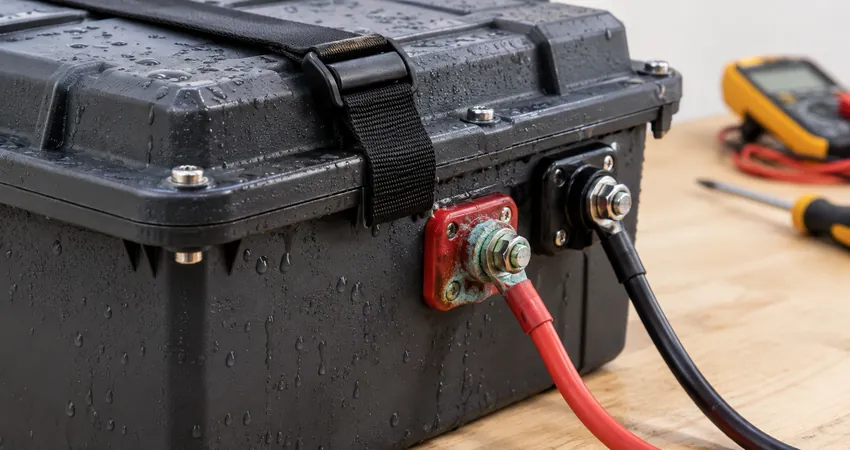
| Rust, white deposits, or green corrosion around terminals | Metal corrosion or salt residue |
| Abnormal voltage or interrupted power output | Circuit or electrical connection failure |
| Battery fails to charge | BMS protection activation or charging circuit damage |
| Repeated BMS fault alerts | Voltage, temperature, or communication abnormalities |
Persistent overheating, smoke, swelling, and strong chemical odors are serious warning signs. If any of these symptoms occur, move away from the equipment and contact qualified professionals.
Some forms of water damage may remain hidden inside the battery enclosure. Therefore, a battery should not be considered safe based solely on its external appearance.
What Should You Do If a Marine Lithium Battery Gets Wet?
If a marine lithium battery becomes wet or submerged, the priority is to protect people, prevent further charging or discharging, and reduce the risk of additional electrical hazards.
Follow these safety precautions:
Stop Using the Battery Immediately: Shut down the connected marine equipment. Do not restart the equipment to check whether the battery still works.
Disconnect Power Only When Safe: If the area is dry and there are no apparent electrical hazards, follow the equipment manufacturer’s instructions to shut off power. Never touch a submerged battery, exposed wiring, or electrical switches if there is a risk of electric shock.
Do Not Recharge the Battery: Never connect a wet or submerged battery to a charger. Avoid discharge testing to determine whether the battery is still functional.
Do Not Disassemble or Heat the Battery: Do not open the battery enclosure, use a heat gun to dry internal components, or attempt to clean the circuitry yourself. These actions may create additional electrical hazards.
Contact Qualified Professionals: Inform the battery manufacturer or a qualified battery technician about the water exposure. They can determine the appropriate inspection and handling procedures.
The National Fire Protection Association (NFPA), in its Lithium-Ion Battery Safety Guidance, warns that damaged or malfunctioning lithium-ion batteries may present fire hazards and should not continue to be used without appropriate safety precautions.
If the battery begins smoking, overheating continuously, or making unusual noises, move away from the affected area immediately. If necessary, evacuate the boat compartment and contact local emergency services or marine rescue authorities.
Do not attempt to move a visibly damaged battery without professional guidance.
Can a Marine Lithium Battery Still Be Used After Water Damage?
Whether a water-damaged marine lithium battery can be reused cannot be determined simply by checking its appearance, output voltage, or ability to accept a charge.
Battery manufacturers generally need to evaluate the extent of water exposure, enclosure integrity, internal components, and electrical test results before determining whether further use is appropriate.
| Water Exposure Scenario | Potential Risk | Recommended Action |
| Brief rain exposure on the enclosure | Depends on the IP rating and seal integrity | Inspect according to manufacturer guidelines |
| Moisture around battery terminals | Possible corrosion or connection failure | Stop using the battery and inspect the connections |
| Confirmed water intrusion inside the battery pack | Potential hidden electrical damage | Stop using the battery and obtain a professional evaluation |
| Complete seawater submersion | Increased risk of short circuits and corrosion | Isolate the equipment and assess whether replacement is necessary |
| Swelling, smoke, or abnormal overheating | Possible severe internal failure | Move away immediately and seek emergency assistance |
Professional inspections may include enclosure integrity checks, insulation resistance measurements, BMS diagnostics, and internal corrosion assessments.
These procedures should only be performed by qualified personnel under controlled conditions.
Even if a battery begins working again after drying naturally, residual salt deposits and internal corrosion may continue to affect its safety.
Therefore, a water-damaged battery should not be returned to service without clearance from the manufacturer or a qualified professional.
How Can You Prevent Water Intrusion and Damage to Marine Lithium Batteries?
For marine battery systems, preventing water intrusion is generally more practical than repairing a battery after water damage occurs.
Battery manufacturers should consider enclosure construction, sealing materials, electrical connectors, and environmental conditions when developing protective designs.
Choose the Right IP Protection Rating
An Ingress Protection (IP) rating indicates how effectively an electrical enclosure protects against solid objects and water intrusion.
Marine battery applications may require protection against splashing water, water jets, or temporary submersion under specified conditions.
| IP Rating | Water Protection | Important Considerations |
| IP65 | Protection against water jets | Does not indicate suitability for submersion |
| IP66 | Protection against powerful water jets | Applies to specified water jet testing conditions |
| IP67 | Protection against temporary immersion | Does not indicate suitability for continuous submersion |
| IP68 | Protection against immersion under specified conditions | Confirm the manufacturer’s stated immersion depth and duration |
Buyers should select an appropriate IP rating based on the actual installation environment and verify the testing conditions for the complete battery pack.
An IP68 rating does not mean a battery can operate safely at any depth, for any duration, or under all seawater conditions.
Improve Enclosure Sealing and Connector Design
Battery enclosures can incorporate corrosion-resistant materials suitable for marine environments. Sealing gaskets, structural seals, and waterproof cable entry points can help reduce the risk of water intrusion.
For marine equipment that requires frequent electrical connections and disconnections, manufacturers should select waterproof connectors appropriate for the operating environment.
Connector engagement, sealing components, and cable strain relief should also be inspected regularly.
Choose a Suitable Battery Installation Location
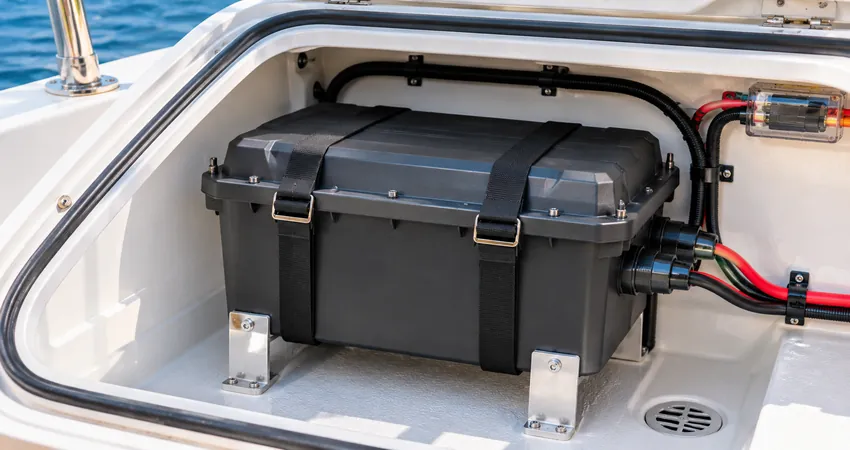
Marine lithium batteries should be installed in locations that meet manufacturer requirements, allow convenient inspections, and minimize exposure to standing water.
Installation planning should account for vessel vibration, heat dissipation, drainage, and cable routing.
For locations where flooding is possible, additional protective measures and electrical isolation systems should be considered according to applicable marine electrical design requirements.
Establish Regular Inspection and Maintenance Procedures
Boat owners and operators should periodically inspect battery enclosures for cracks, deteriorating seals, corroded terminals, and loose connectors.
The Occupational Safety and Health Administration (OSHA), in its Lithium-Ion Battery Safety and Hazard Prevention Guidance, emphasizes the importance of recognizing potential battery hazards and implementing appropriate safety measures during battery use and maintenance.
For commercial marine fleets, maintaining inspection records and scheduled maintenance procedures can help identify aging protective components and potential electrical faults before they develop into more serious problems.
What Safety Features Should You Look for When Buying Marine Lithium Batteries?
For marine equipment manufacturers, system integrators, and bulk battery buyers, battery safety depends on more than cell performance. The overall battery pack design, protection system, and manufacturing processes also play important roles.
Consider the following factors when selecting marine lithium batteries:
- Battery Chemistry: Lithium iron phosphate (LiFePO4) batteries generally offer favorable thermal stability and cycle life characteristics, making them suitable for various marine energy storage and auxiliary power applications. However, they still require appropriate safety protection.
- BMS Protection Features: Select overcharge, overdischarge, overcurrent, short-circuit, and temperature protection functions according to the application. Verify that the protection strategy is compatible with the vessel’s electrical system.
- Enclosure Protection: Confirm the IP rating, sealing materials, corrosion resistance, and actual testing conditions.
- Electrical Connections and Communication: Choose suitable connectors, wiring harnesses, and communication interfaces, such as CAN bus or RS485, based on system requirements.
- Quality Verification: Review waterproof testing, insulation testing, vibration testing, and other applicable safety verification procedures.
Buyers should also request relevant test reports, operating limitations, and installation instructions from the battery manufacturer rather than relying solely on advertised waterproof ratings.
FAQs:About Marine Lithium Battery Water Damage
Does a Marine Lithium Battery Need to Be Replaced After Rain Exposure?
Not necessarily. If the battery has an appropriate IP rating and its enclosure and electrical connections remain intact, brief rain exposure may not cause internal damage.
However, if you notice damaged seals, fault alerts, or signs of internal water intrusion, stop using the battery and contact the manufacturer for an inspection.
Can Prolonged Moisture Exposure Shorten Marine Lithium Battery Life?
Yes, it can. Prolonged moisture exposure may accelerate terminal corrosion, connector deterioration, and insulation degradation, potentially reducing the reliability of the battery system.
The actual impact depends on the enclosure design, environmental conditions, and maintenance practices.
Can a Marine Lithium Battery Lose Its Waterproof Protection Over Time?
Yes. Aging gaskets, mechanical vibration, temperature fluctuations, and enclosure damage can gradually compromise sealing performance.
Even if a battery passes waterproof testing during manufacturing, its protective components should still be inspected throughout its service life.
Should Marine Batteries Be Checked for Waterproofing Issues?
Regular inspections are recommended. Inspection intervals should depend on vessel usage, environmental conditions, and the manufacturer’s maintenance requirements.
Commercial marine fleets and vessels operating in highly humid environments can incorporate enclosure, gasket, and connector inspections into their routine maintenance schedules.
How to Store and Dispose of Water-Damaged Marine Lithium Batteries?
Do not place a damaged battery in regular household trash, disassemble it, or attempt to discharge it yourself.
Contact the battery manufacturer, a qualified battery recycling facility, or local emergency authorities for guidance on safe isolation, temporary storage, and transportation.
Batteries showing signs of overheating, smoke, or other dangerous conditions should be handled by trained professionals.
HiMAXBATT: Marine Battery Manufacturing & Customization
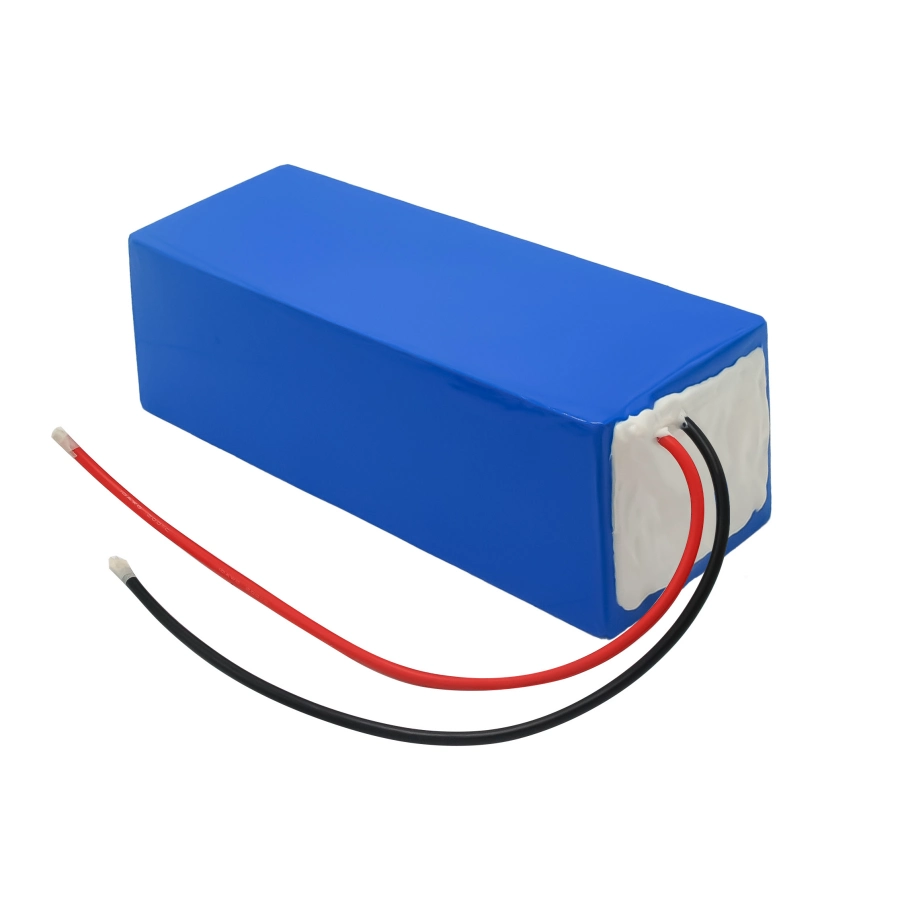
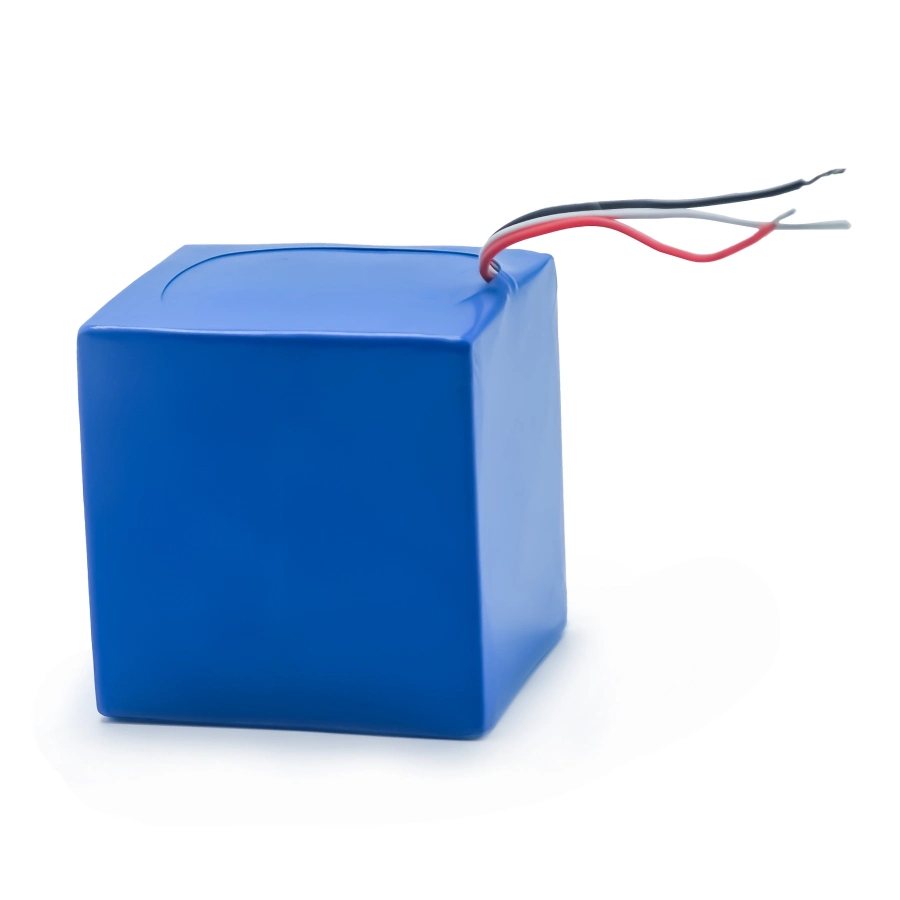
HiMAXBATT is a battery manufacturer specializing in the development, manufacturing, and supply of rechargeable lithium batteries and custom battery packs. We are committed to providing reliable and flexible power solutions for B2B customers worldwide. For marine battery applications, HiMAXBATT offers professional OEM/ODM battery customization services tailored to the specific requirements of marine equipment manufacturers, system integrators, and bulk buyers. Our customization options include battery voltage, capacity, cell configuration, Battery Management Systems (BMS), protective enclosure designs, waterproof connectors, and communication interfaces.