| Commercial Summary: Generally, HiMAXBATT does not derive revenue from its articles; the editorial viewpoints expressed therein are our own and are published independently. We are a manufacturer of lithium batteries. |
Key Takeaways
- Voltage Compatibility: Match your battery system to your trolling motor’s 12V, 24V, or 36V requirements.
- Battery Capacity: Choose the right Ah or Wh rating based on current draw, operating time, and reserve capacity.
- Runtime Estimates: Calculate battery life using usable capacity and average current draw.
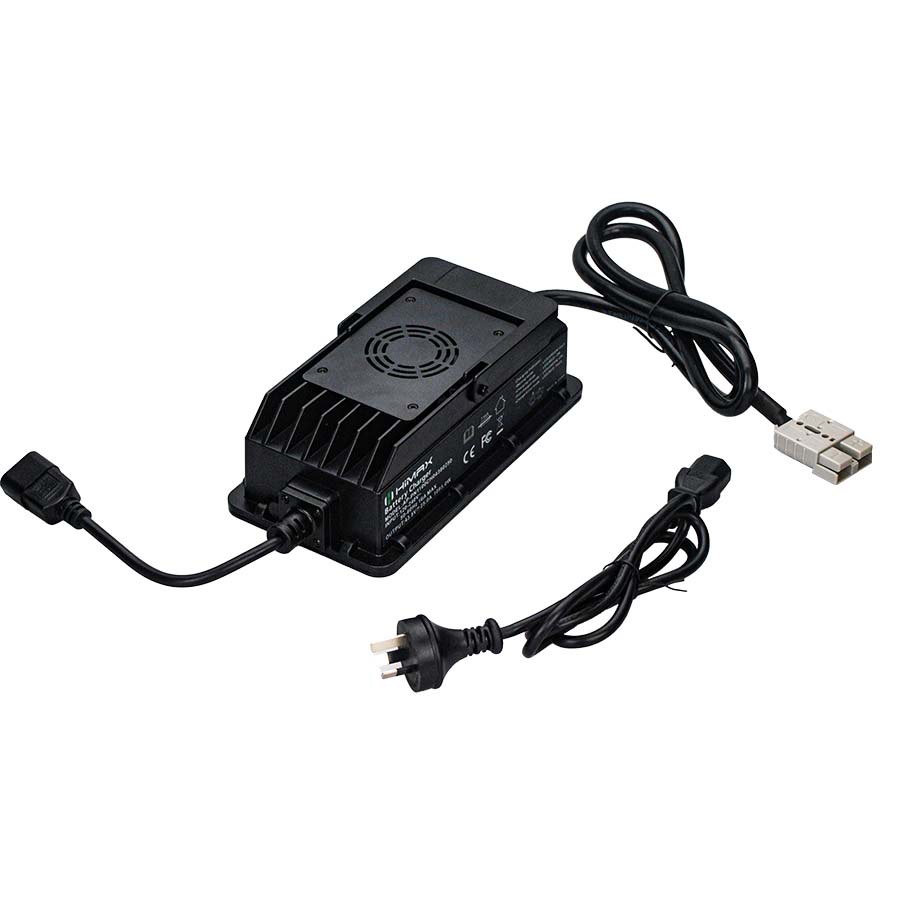
- Proper Charging: Use a compatible lithium battery charger and follow the recommended charging limits.
- Marine Safety: Check BMS discharge ratings, moisture protection, wiring, and secure installation.
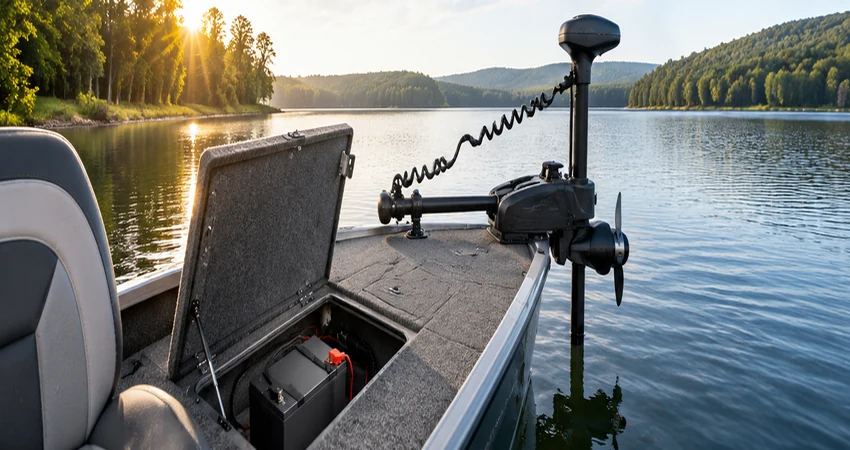
Trolling motors are widely used on fishing boats, small recreational boats, and other vessels that require low-speed propulsion and precise maneuvering. Unlike gas-powered propulsion systems, trolling motors rely on batteries for power. Battery voltage, capacity, discharge capability, and charging performance directly affect motor runtime and operating reliability.
As marine battery technology continues to evolve, lithium batteries for trolling motors have become an increasingly popular alternative to traditional lead-acid batteries. But how do you choose between 12V, 24V, and 36V systems? What are the differences between 50Ah, 100Ah, and 200Ah batteries? This guide explains battery sizing, runtime calculations, charging practices, and marine safety requirements from a battery manufacturer’s perspective.
Why Are Lithium Batteries a Suitable Choice for Trolling Motors?
Trolling motors use electric motors to drive propellers, providing low-speed propulsion for boats. Because they continuously draw power during operation, they require batteries that deliver stable output and sufficient usable capacity.
Traditionally, trolling motors have relied on deep-cycle lead-acid batteries, including AGM and flooded lead-acid models. More recently, lithium iron phosphate (LiFePO4) batteries have gained traction in marine power systems because of their lighter weight, longer cycle life, and relatively stable discharge voltage.
| Comparison | Deep-Cycle Lead-Acid Batteries | LiFePO4 Batteries |
| Weight | Generally heavier at the same rated energy | Generally lighter |
| Usable Capacity | Deep discharge can significantly affect lifespan | Typically supports a higher usable capacity percentage |
| Cycle Life | Strongly affected by depth of discharge | Generally offers a longer cycle life |
| Maintenance | Some types require regular maintenance | Typically requires no electrolyte refilling |
| Initial Cost | Generally lower | Generally higher |
However, lithium batteries are not automatically compatible with every trolling motor. Users should verify that the motor controller supports the lithium battery’s operating voltage range and that the battery management system (BMS) can handle the motor’s current requirements.
How to Choose Between 12V, 24V, and 36V Lithium Batteries for Trolling Motors
What Are the Differences Between 12V, 24V, and 36V Trolling Motors?
A trolling motor’s rated voltage is generally related to its power requirements, thrust rating, and intended application. The following table outlines common configurations.
| Motor Voltage | Typical Applications | Example Battery Configuration |
| 12V | Small fishing boats, lightweight vessels, and lower-power systems | One 12.8V LiFePO4 battery |
| 24V | Medium-sized fishing boats and applications requiring higher thrust | One 25.6V battery or two 12.8V batteries connected in series |
| 36V | Larger fishing boats and higher-thrust systems | One 38.4V battery or three 12.8V batteries connected in series |
These configurations use common nominal LiFePO4 battery voltages as examples. Before installation, always verify the trolling motor’s allowable input voltage range and the battery manufacturer’s configuration requirements.
Why Must Battery Voltage Match the Trolling Motor?
Voltage compatibility determines whether a battery system can operate properly with the motor controller. Excessive input voltage may damage the controller, while insufficient voltage can prevent the motor from starting, reduce power output, or trigger protective shutdowns.
For example, a trolling motor rated for 24V should not be connected directly to a 36V battery. Likewise, a 12V trolling motor should not be connected to a 24V battery simply to increase thrust.
It is also important to understand that increasing battery capacity in Ah does not increase battery voltage. Users may choose a higher-capacity battery at the same voltage when other technical requirements are satisfied, but they should not arbitrarily increase system voltage.
Should You Use a Single Battery or Multiple Batteries in Series?
Connecting batteries in series increases the total system voltage without increasing the capacity measured in Ah. For example, connecting two 12.8V 100Ah batteries in series creates a battery system rated at a nominal 25.6V and 100Ah.
However, not all lithium batteries support series connections. Battery manufacturers must verify BMS compatibility, cell consistency, charging arrangements, and system protection requirements.
For marine equipment manufacturers, a purpose-built 24V or 36V battery pack can help standardize BMS configurations, connectors, and overall system management.
What Lithium Battery Capacity Does a Trolling Motor Need?
What Is the Difference Between Ah and Wh?
Amp-hours (Ah) measure a battery’s charge capacity, while watt-hours (Wh) represent its nominal stored energy.
Nominal Battery Energy (Wh) = Nominal Voltage (V) × Rated Capacity (Ah)
For example, a 12.8V 100Ah LiFePO4 battery has a nominal energy capacity of 1,280Wh, while a 25.6V 100Ah battery stores 2,560Wh.
Therefore, when comparing batteries with different voltages, you should evaluate their energy capacity in Wh rather than relying solely on their Ah ratings.
How Do You Calculate the Battery Capacity Required for a Trolling Motor?
If you know your trolling motor’s average current draw and expected operating time, you can estimate the required battery capacity using the following formula:
Required Battery Capacity (Ah) = Average Current Draw (A) × Operating Time (Hours) ÷ Planned Usable Capacity Fraction
Suppose a trolling motor draws an average of 20A and needs to operate continuously for four hours. If you plan to use 80% of the battery’s rated capacity:
20A × 4 hours ÷ 0.80 = 100Ah
A 100Ah battery would therefore be a reasonable starting point for sizing. However, you must also check the battery’s continuous discharge rating, operating temperature limits, and the motor’s starting or high-load current requirements.
Should You Choose a 50Ah, 100Ah, 150Ah, or 200Ah Battery?
| Battery Capacity | Typical Use | Key Considerations |
| 50Ah | Short-duration, low-power operation | Usually smaller and lighter |
| 100Ah | Moderate trolling motor runtime | A balance between capacity and portability |
| 150Ah | Extended time on the water | Provides additional energy reserves |
| 200Ah | Long operating periods or higher energy demands | Requires consideration of installation space and weight |
These categories are general sizing references, not fixed motor power or runtime specifications.
Actual battery requirements also depend on boat weight, passenger load, water current, wind resistance, and motor speed settings. Operating against a current or frequently using higher thrust can significantly increase average current draw, so an appropriate capacity reserve should be included.
How Long Can a Lithium Battery Run a Trolling Motor?
How to Estimate Trolling Motor Battery Runtime
Once you have selected a battery capacity, you can estimate runtime based on the motor’s average current draw.
Estimated Runtime (Hours) = Rated Battery Capacity (Ah) × Actual Usable Capacity Fraction ÷ Average Current Draw (A)
For example, a 100Ah lithium battery with 90% usable capacity powering a trolling motor that draws an average of 20A would provide approximately 4.5 hours of estimated runtime.
This formula assumes the battery capacity and motor current draw refer to the same voltage system. The result is an estimate and does not guarantee actual runtime on the water.
Runtime Examples for Different Voltages and Loads
Assume that 12V, 24V, and 36V trolling motors each use a compatible 100Ah battery system with 90% usable capacity.
| Motor Voltage | Assumed Average Current Draw | Battery Capacity | Estimated Runtime |
| 12V | 15A | 100Ah | About 6 hours |
| 12V | 30A | 100Ah | About 3 hours |
| 24V | 20A | 100Ah | About 4.5 hours |
| 36V | 30A | 100Ah | About 3 hours |
The current values above are hypothetical examples and do not represent the actual power consumption of specific trolling motor models. Because the total stored energy differs between voltage systems, these runtime figures should not be used to compare motor efficiency directly.
Why Might Actual Runtime Be Shorter Than Calculated Runtime?
A trolling motor’s current draw is rarely constant. Traveling against a current, operating in strong winds, or carrying heavier loads can require more thrust and increase power consumption.
Cold temperatures, battery aging, voltage drops in wiring, and BMS protection thresholds may also affect usable capacity.
To extend runtime, adjust thrust settings based on water conditions, avoid unnecessary high-power operation, and check battery charge levels before heading out.
How to Properly Charge Lithium Batteries for Trolling Motors
Why Do LiFePO4 Batteries Need Compatible Chargers?
LiFePO4 and lead-acid batteries have different charging voltage and control requirements. Some lead-acid chargers include equalization or high-voltage recovery modes that are unsuitable for LiFePO4 batteries.
According to Battery University’s Guide to Charging Lithium-Ion Batteries, lithium batteries require controlled charging voltage and current and generally do not need the equalization charging procedures used with lead-acid batteries.
Therefore, users should choose a charger compatible with their battery chemistry and verify that the charging cutoff voltage matches the battery pack specifications.
How to Choose a Marine Battery Charger and Estimate Charging Time
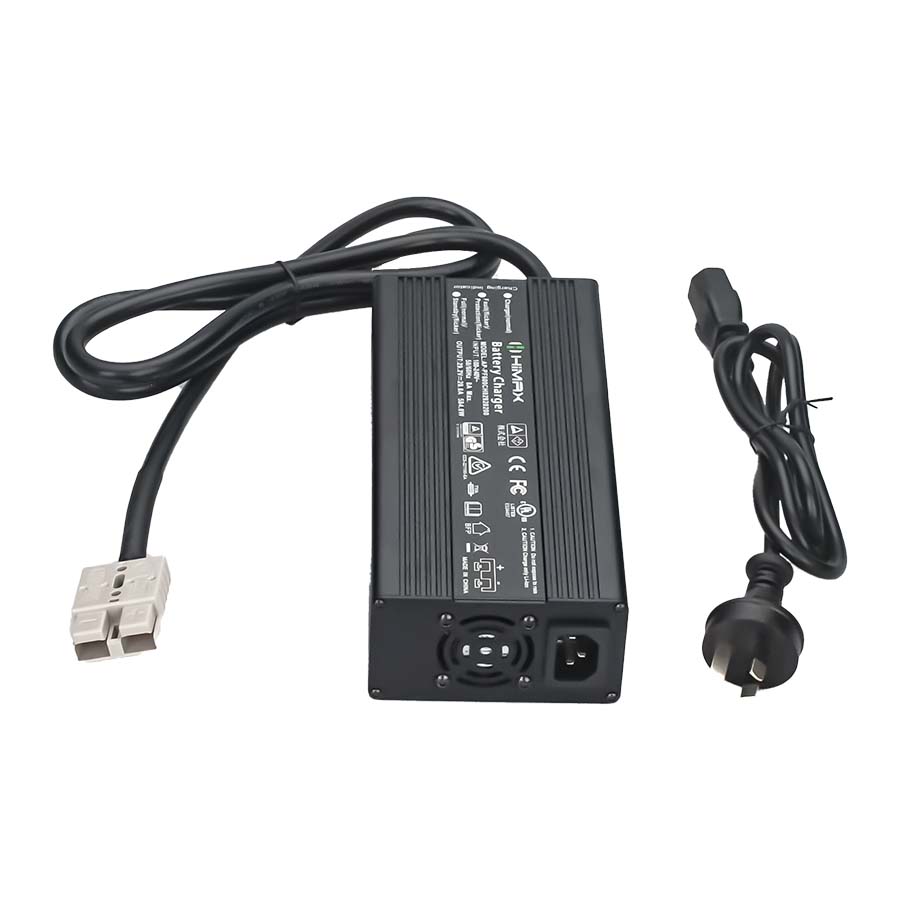
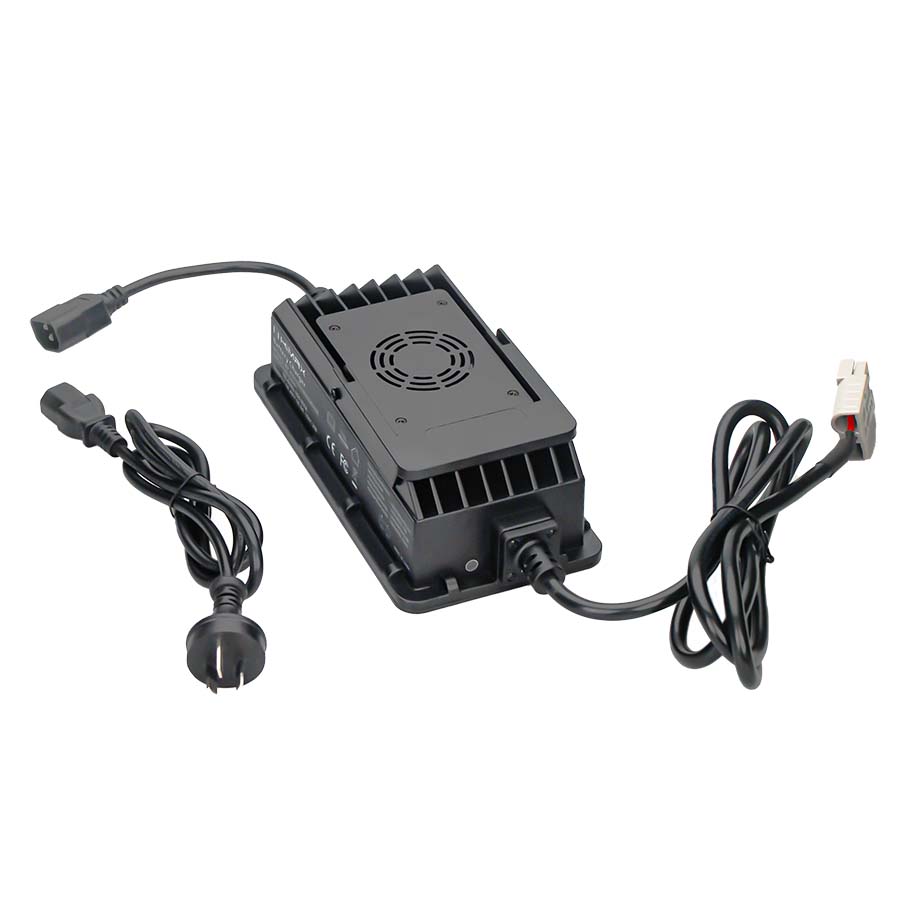
When selecting a charger, check the battery’s nominal voltage, allowable charging current, connector type, and suitability for marine environments.
Charging time can be estimated using the following formula:
Estimated Charging Time (Hours) ≈ Capacity to Be Replenished (Ah) ÷ Average Effective Charging Current (A)
For example, if a 100Ah battery needs 80Ah of charge and the average effective charging current is 20A, the estimated charging time is approximately four hours.
During the final charging stage, the battery may enter a constant-voltage phase in which charging current gradually decreases. As a result, a complete charge may take longer.
How to Charge Batteries in Cold Weather or During Extended Inactivity?
Standard LiFePO4 batteries generally should not be charged below 32°F (0°C) unless the battery system is specifically designed to support charging under those conditions.
Some marine lithium batteries include low-temperature charging protection or built-in heating systems, but users must still follow the manufacturer’s specified temperature limits.
When a boat remains docked for an extended period, avoid leaving the battery connected to an incompatible charger. Before long-term storage, adjust the battery’s state of charge according to the manufacturer’s instructions and periodically inspect its voltage and physical condition.
Marine Lithium Battery Safety and Installation Requirements
Water Resistance, Moisture Protection, Corrosion Resistance, and Vibration
Marine batteries may be exposed to moisture, salt spray, vibration, and changing temperatures. Battery enclosures, terminals, and connectors should therefore be selected according to the installation environment.
For example, an IP67 rating generally indicates dust protection and resistance to temporary immersion under specified test conditions. It does not mean the battery is suitable for continuous underwater use.
In saltwater environments, corrosion resistance at metal terminals and reliable sealing around electrical connections are particularly important.
BMS Discharge Ratings Must Meet Motor Requirements
A battery management system (BMS) provides protection against overcharging, overdischarging, and short circuits. It must also support the trolling motor’s continuous current draw and short-duration load requirements.
For example, if a motor requires 50A under heavy load but the battery’s BMS supports only 30A of continuous discharge, overcurrent protection may activate and shut down the motor.
Battery manufacturers should therefore design BMS configurations around motor controller characteristics, operating current, and peak load requirements rather than battery capacity alone.
Battery Installation and Electrical Protection
The American Boat & Yacht Council (ABYC) publishes the E-13 Standard for Lithium-Ion Batteries, which addresses aspects of marine lithium battery selection, installation, system design, and manufacturer safety information.
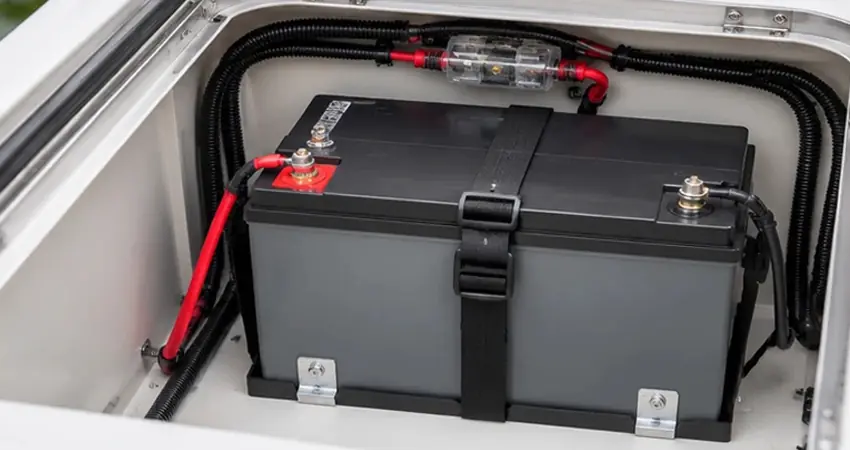
During installation, secure the battery to prevent movement caused by boat vibration. Select appropriate wire gauges, fuses, and terminals based on operating current and cable length.
Before each trip, inspect the connections for looseness, check cables for wear, and look for unusual battery case deformation or signs of overheating.
FAQs:About Trolling Motor Lithium Batteries
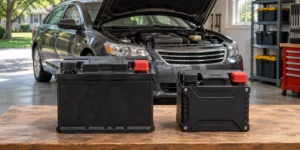
Can You Use a Lithium Car Starting Battery for a Trolling Motor?
It is generally not recommended as a direct replacement. Car starting batteries are primarily designed to deliver high current for short periods, while trolling motors require sustained discharge. Choose a battery specifically rated for deep-cycle use and continuous power delivery.
Can You Upgrade a Trolling Motor Battery From 50Ah to 100Ah?
Yes, provided the rated voltage, charging system, installation space, and BMS discharge capability meet the motor’s requirements. Increasing battery capacity can generally extend runtime, but it does not directly increase the motor’s rated thrust.
Can a Trolling Motor and Fish Finder Share the Same Lithium Battery?
Some systems can share a power source, but voltage compatibility, total electrical load, and electrical interference must be considered. Sensitive electronics such as fish finders may be affected by electrical noise from the motor, so some boats use separate power supplies or dedicated filtering solutions.
Do Trolling Motor Lithium Batteries Need to Be Fully Discharged Regularly?
Generally, no. LiFePO4 batteries do not exhibit the typical memory effect associated with traditional nickel-cadmium batteries, and frequent deep discharge is not required for routine maintenance.
What Charge Level Is Best for Long-Term Marine Lithium Battery Storage?
Some LiFePO4 battery manufacturers recommend storing batteries at approximately 40%–60% state of charge, although the appropriate range depends on the product.
HiMAXBATT: Custom Lithium Battery Pack Assembly Solutions for Marine Trolling Motors
HiMAXBATT is a professional battery manufacturer specializing in lithium-ion batteries, lithium iron phosphate (LiFePO4) batteries, and custom battery pack assembly solutions. With expertise in battery manufacturing and OEM/ODM customization, HiMAXBATT provides custom lithium battery pack assembly services for trolling motors, marine power systems, and other watercraft equipment.