| Commercial Summary: Generally, HiMAXBATT does not derive revenue from its articles; the editorial viewpoints expressed therein are our own and are published independently. We are a manufacturer of lithium batteries. |

Key Takeaways
- Battery Selection: Match battery voltage, capacity, and connectors to your Christmas lights.
- Runtime: Estimate operating hours using battery capacity, light wattage, and power conversion efficiency.
- Connections: Use compatible DC power for low-voltage lights and an AC power station for AC-powered lights.
- Charging: Choose the correct charger and follow temperature limits, especially in winter.
- Outdoor Safety: Protect batteries and connections from moisture, short circuits, and overloads.
As Christmas approaches, homeowners and businesses begin decorating their yards, gardens, balconies, and commercial spaces with LED Christmas lights. However, some outdoor areas lack convenient electrical outlets. Running long extension cords can affect the appearance of holiday decorations while creating additional wiring and electrical safety concerns.
Portable lithium batteries offer an alternative way to power outdoor Christmas lights. By considering the lights’ power consumption, operating time, and environmental conditions, users can choose a suitable lithium battery pack or portable power station. This guide explains how to select the right battery, calculate runtime, connect Christmas lights, charge batteries properly, and maintain safety during winter.
Why Use Portable Lithium Batteries for Outdoor Christmas Lights?
Traditional outdoor Christmas lights typically rely on electrical outlets. When decorations are installed far from a building, users may need long extension cords, which can complicate installation and maintenance.
Portable lithium batteries reduce dependence on fixed outlets, making them useful for Christmas trees in yards, garden string lights, patio decorations, and temporary commercial events. Compared with disposable batteries, rechargeable lithium batteries can be used repeatedly, helping reduce battery replacements when lighting systems operate frequently.
Some lithium battery packs can also be customized to meet specific voltage, capacity, and installation requirements. However, whether a battery is suitable for outdoor use depends on its enclosure, battery management system, and operating temperature range. Portability alone does not guarantee outdoor compatibility.
How to Choose the Right Portable Lithium Battery for Outdoor Christmas Lights
Check the Voltage, Wattage, and Connectors
Before choosing a battery, check the specifications printed on the Christmas lights or their original power adapter. Identify the input voltage, AC or DC power requirements, rated wattage, and connector type.
For example, LED string lights labeled 12V DC generally require a stable 12V DC power supply. Because a lithium battery pack’s terminal voltage changes as it charges and discharges, matching the nominal voltage alone is not enough. A voltage regulator may be necessary.
For AC-powered Christmas lights, choose a portable power station with the correct output voltage, frequency, and power rating.
Lithium-Ion vs. LiFePO4 Batteries: Which Should You Choose?
| Feature | Common Ternary Lithium-Ion Batteries | Lithium Iron Phosphate (LiFePO4) Batteries |
| Energy Density | Generally higher | Generally lower |
| Cycle Life | Depends on cell design and operating conditions | Typically offers longer cycle life |
| Thermal Stability | Requires appropriate thermal management and protection | Cathode chemistry generally offers better thermal stability |
| Suitable Applications | Devices prioritizing lightweight and portable designs | Devices requiring frequent cycling and long-term operation |
Both battery chemistries can support outdoor lighting applications. However, actual performance depends on cell design, the battery management system (BMS), enclosure construction, and environmental conditions.
Choose Battery Capacity Based on Operating Time
Battery energy capacity is commonly expressed in watt-hours (Wh). It can also be calculated using nominal voltage and amp-hour (Ah) capacity:
Battery Energy (Wh) = Nominal Voltage (V) × Rated Capacity (Ah)
For example, a 12.8V 20Ah LiFePO4 battery pack has a nominal energy capacity of approximately 256Wh.
Small residential LED light strings may only require a relatively compact battery. Commercial lighting installations, however, often need to account for multiple light strings operating simultaneously, longer operating hours, and sufficient continuous power output.
How Long Can Portable Lithium Batteries Power Outdoor Christmas Lights?
Battery Runtime Calculation Formula
To estimate how long Christmas lights can operate on battery power, use the following formula:
Estimated Runtime (Hours) = Battery Energy (Wh) × Usable Energy Fraction × Power Conversion Efficiency ÷ Total Light Wattage (W)
The usable energy fraction depends on factors such as discharge cutoff voltage, BMS settings, and battery condition. Power conversion efficiency depends on equipment such as DC-DC converters or AC inverters.
Runtime Examples for Different LED Christmas Light Wattages
Assume a battery-powered system has a nominal capacity of 256Wh, a usable energy fraction of 90%, and a power conversion efficiency of 85%.
Under these assumptions, approximately 196Wh of energy is available to power the lights.
| Total LED Christmas Light Wattage | Estimated Runtime |
| 10W | Approximately 19.6 hours |
| 20W | Approximately 9.8 hours |
| 30W | Approximately 6.5 hours |
| 50W | Approximately 3.9 hours |
These figures are theoretical estimates, not measured results from a specific battery product. Actual runtime may vary depending on low temperatures, inverter standby consumption, battery aging, and lighting modes.
How to Extend Outdoor Christmas Light Battery Runtime
Choosing energy-efficient LED string lights and using timers can help reduce power consumption.
For example, reducing daily lighting time from eight hours to five hours lowers total daily energy use.
For decorations spread across multiple areas, consider dividing the lighting system into independently controlled zones rather than running every light continuously. Commercial users can also schedule different lighting zones to operate at specific times, improving overall battery energy utilization.
How to Connect Portable Lithium Batteries to Outdoor Christmas Lights
Connecting DC LED Christmas Lights
For 12V or 24V DC LED string lights, use a lithium battery power system with a compatible output voltage.
Before connecting the lights, turn off the power and verify the positive and negative terminals, connector specifications, and the lights’ acceptable input voltage range.
If the battery output voltage fluctuates outside the lights’ permitted range, use a suitable DC-DC voltage regulator. The wiring should also include appropriately rated fuses to help prevent damage caused by short circuits.
Connecting AC Christmas Lights
For Christmas lights designed to operate on 110V or 220V AC power, use a portable power station with a compatible AC output. Do not connect AC-powered lights directly to a bare lithium battery pack.
Make sure the power station’s continuous output rating can handle the combined lighting load. Also check plug compatibility, grounding requirements, and inverter output specifications.
When turning on the lights for the first time, confirm that they operate normally. Inspect the connections for unusual heat, odors, or loose contacts. If anything appears abnormal, disconnect the power immediately and inspect the system.
How to Charge Portable Lithium Batteries Used for Outdoor Christmas Lights
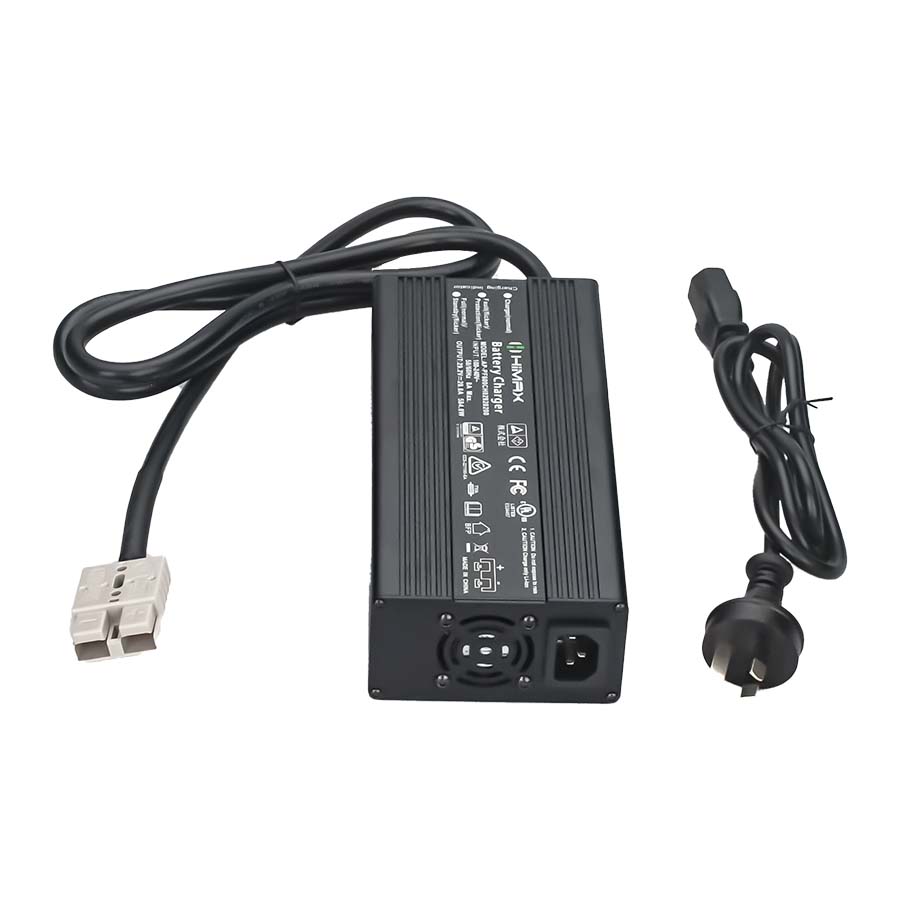
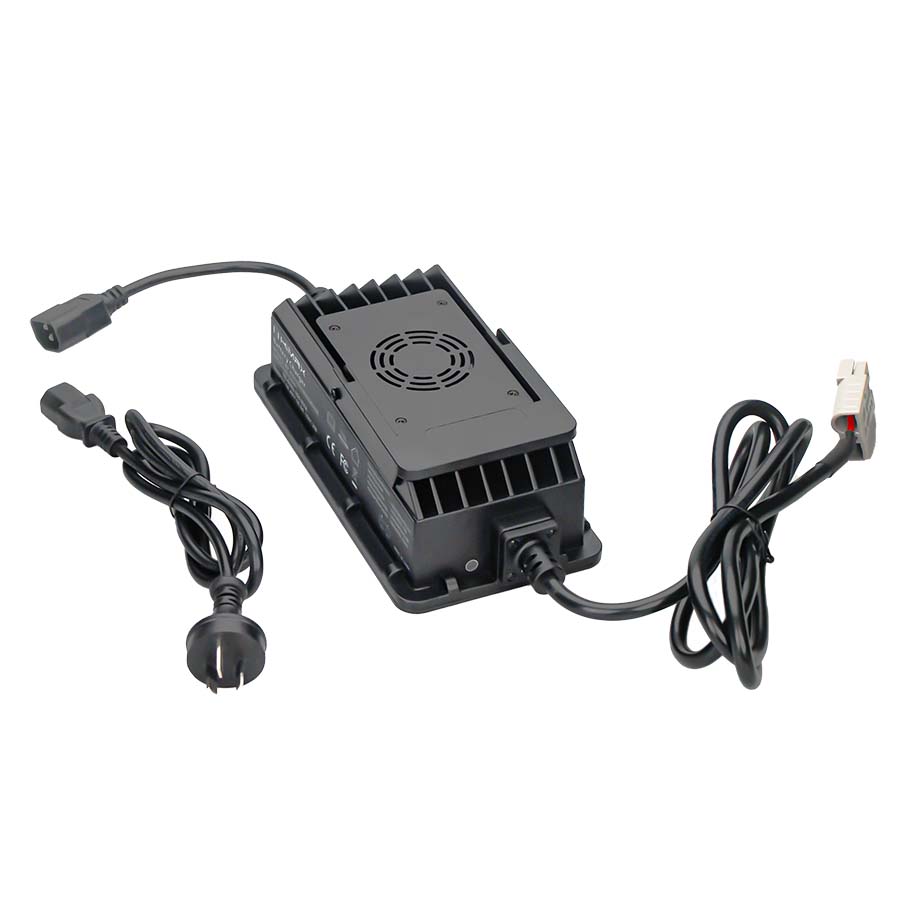
Use a Charger Compatible With the Battery
Different lithium battery chemistries have different charging voltage limits and control requirements.
For example, LiFePO4 cells and common ternary lithium-ion cells have different nominal voltages and charging profiles. Their chargers should not be used interchangeably unless the charging equipment explicitly supports both chemistries and is configured correctly.
For battery packs equipped with a BMS, follow the battery manufacturer’s specified charging voltage, current, and temperature requirements.
How to Estimate Battery Charging Time
Charging time depends on the amount of energy being replenished, charging power, and charging efficiency.
Estimated Charging Time ≈ Energy to Be Replenished (Wh) ÷ Average Effective Charging Power (W)
For example, if a 256Wh battery needs approximately 200Wh of additional energy and the average effective charging power is 50W, charging would take about four hours.
However, lithium batteries typically use constant-current and constant-voltage charging stages. Charging power may decrease near the end of the charging process, so the actual time required for a full charge may be longer.
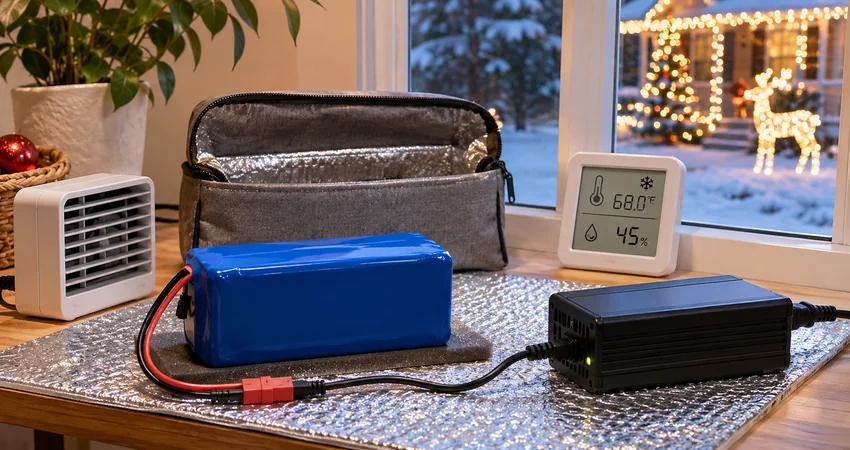
How to Charge Lithium Batteries in Cold Weather
Cold-weather charging requires particular attention during the winter holiday season.
According to Battery University in its article Charging at High and Low Temperatures, charging conventional lithium-ion batteries below 32°F (0°C) can cause lithium plating, potentially affecting battery performance and safety.
Therefore, conventional lithium batteries should not be charged below their approved temperature range.
Some specially designed low-temperature battery systems use heating elements, temperature sensors, and charging control strategies to support operation in cold environments. However, users must follow the specifications of the particular battery system.
During periods of frequent holiday lighting use, plan charging schedules in advance and charge batteries in a dry, ventilated environment that meets the manufacturer’s requirements.
Safety Tips for Using Portable Lithium Batteries Outdoors in Winter
Protect Batteries From Rain, Snow, and Moisture
Outdoor Christmas lighting systems may be exposed to rain, snow, condensation, and changing humidity levels.
Battery enclosures, connectors, and power interfaces should have appropriate ingress protection ratings for the intended environment.
For example, an IP65 rating generally indicates dust-tight protection and resistance to water jets. However, it does not mean the equipment can be submerged in water.
The suitability of an enclosure also depends on product testing, connector conditions, and actual installation requirements.
Understand How Cold Weather Affects Battery Discharge
Low temperatures can increase a lithium battery’s internal resistance and reduce its available capacity and power output.
As a result, a battery that can power Christmas lights throughout the evening at room temperature may trigger low-voltage protection earlier in freezing conditions.
Battery manufacturers establish discharge temperature limits based on cell characteristics and system design. Always consult the specific battery’s technical datasheet rather than assuming that all lithium batteries perform the same way in cold weather.
Prevent Short Circuits, Overloads, and Overheated Wiring
Battery packs should include an appropriately designed BMS, along with protection components selected according to fuse ratings, wire size, and connector current limits.
The U.S. Consumer Product Safety Commission (CPSC), in its Seasonal and Decorative Lighting Products Safety Guidance, addresses the importance of wire sizing, strain relief, and overcurrent protection for relevant decorative lighting products.
During installation, avoid placing cables where they may be pinched, damaged by abrasion, or exposed to standing water.
For AC-powered outdoor lighting systems, use ground-fault circuit interrupter (GFCI) protection where required by the equipment specifications and applicable electrical codes.
Proper Battery Placement and Storage
Place batteries on stable, dry surfaces away from heat sources, and keep ventilation openings unobstructed.
Portable power stations designed only for indoor use should not be exposed directly to rain or snow. They should also not be enclosed in sealed containers that prevent adequate ventilation.
After the holiday season, prepare batteries for long-term storage according to the manufacturer’s recommended state of charge. Check battery levels periodically and avoid prolonged exposure to high temperatures or excessive discharge.

Frequently Asked Questions About Powering Outdoor Christmas Lights With Lithium Batteries
Can a 100Wh Portable Lithium Battery Power Christmas Lights All Night?
It depends on the lights’ power consumption.
Assuming a 90% usable energy fraction and 85% power conversion efficiency, a 100Wh battery provides approximately 76.5Wh of usable energy.
Under these conditions, a 10W LED light string could operate for approximately 7.7 hours, while a 20W light string would run for approximately 3.8 hours.
Can a Regular USB Power Bank Power Outdoor Christmas Lights?
Some 5V USB-powered Christmas lights can operate from a power bank with compatible output specifications.
However, 12V, 24V, or AC-powered lights generally require additional voltage conversion equipment and cannot be connected directly to a standard 5V USB output.
Can Multiple Christmas Light Strings Share One Portable Power Source?
Yes, provided the combined wattage of the lights remains within the power source’s output capacity and connector current ratings.
Users should also follow the light manufacturer’s limits on how many strings can be connected end to end. Connecting an unlimited number of light strings can create electrical hazards.
Can Portable Lithium Batteries Be Left Outdoors for Several Days?
Only if the product is specifically designed and rated for the expected outdoor conditions, installation method, and operating temperatures.
Indoor-rated battery equipment should not be left exposed to rain, snow, standing water, or significant temperature fluctuations.
Can Solar Panels Recharge Batteries for Outdoor Christmas Lights?
Yes. However, solar panels generally need a compatible solar charge controller or a portable power station with a dedicated solar input.
Winter daylight hours, weather conditions, and solar panel orientation all affect energy production. Users should estimate daily energy generation and consumption before relying on solar charging for holiday lighting.
HiMAXBATT: Custom Lithium Battery Assembly Solutions for Outdoor Lighting
HiMAXBATT is a manufacturer specializing in rechargeable batteries and custom battery pack assembly solutions. We provide OEM/ODM lithium-ion and LiFePO4 battery pack assembly services for applications such as outdoor LED lighting, holiday decorative lights, and portable power equipment. Our customization services support project-specific requirements for battery capacity, output voltage, connectors, and battery management system (BMS) protection.