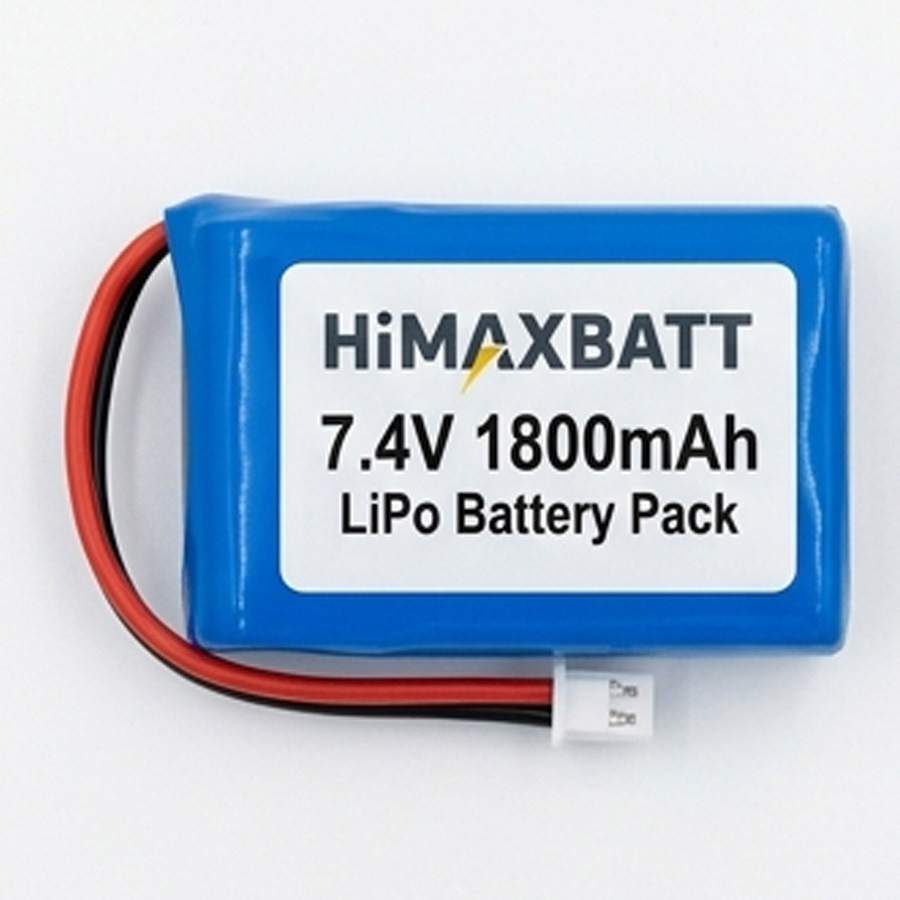
Commercial Disclosure: The HiMAXBATT Editorial Team brings together expertise in lithium battery manufacturing, battery engineering, power systems, and global application support to provide practical, technically informed content for businesses and industry professionals. Our content covers lithium-ion and LiFePO4 batteries, custom battery packs, BMS technology, charging solutions, battery selection, industrial applications, product updates, and HiMAXBATT news. All content reflects HiMAXBATT’s official editorial perspective and our commitment to delivering safe, reliable, and application-focused lithium battery solutions to customers worldwide.
Key Takeaways
- Check voltage before choosing capacity.The battery’s nominal voltage, fully charged voltage, and the device’s allowable input voltage range must be compatible. A connector that physically fits does not necessarily mean the battery can be used safely.
- Calculate energy needs based on power consumption and operating time.When comparing batteries with different voltages, use watt-hours (Wh) rather than relying only on amp-hours (Ah) or milliamp-hours (mAh).
- Capacity and output capability should be evaluated separately.Loads such as trolling motors require both sufficient energy capacity and enough continuous and peak discharge current.
- Outdoor conditions affect power performance.Low temperatures, rain, salt spray, vibration, and connector corrosion should all be considered when selecting a battery.
- Evaluate reliability at the system level.Cells, the BMS, connectors, cables, fuses or circuit breakers, and the charger all need to work together for the intended application.
Introduction
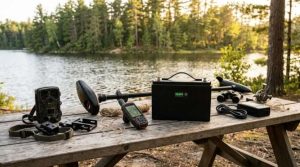
When fishing, fish finders, trolling motors, and night fishing lights may need to operate continuously for several hours. During hunting and wildlife observation, trail cameras, handheld GPS devices, and lighting equipment may face long standby periods, frequent movement, or operation in cold weather.
For this reason, answering the question “How do you choose the right battery for hunting and fishing gear?” requires more than comparing capacity and price. From a battery manufacturing perspective, a suitable outdoor power solution needs to meet equipment compatibility, runtime, output capability, and environmental requirements at the same time.
Start by Identifying Your Equipment’s Power Requirements
Before choosing a battery, make a list of the equipment you plan to power and collect the relevant specifications from equipment manuals, nameplates, or manufacturer technical documentation.
| Equipment Type | Power Characteristics | Battery Selection Considerations |
| Fish finders and sonar displays | Continuous operation; power consumption varies with screen brightness and feature settings | Input voltage range, runtime, power stability, and interference control |
| Trolling motors | Current varies with speed setting, wind, waves, current, and load | System voltage, continuous discharge current, peak current, and cable size |
| Night fishing lights and campsite lighting | Power consumption can vary significantly with brightness level | Actual power consumption at the selected setting, runtime, and connector protection |
| Trail cameras and wildlife monitoring cameras | Long standby periods with concentrated power use during image capture, illumination, and data transmission | Standby consumption, trigger frequency, low-temperature performance, and battery specifications |
| GPS devices and two-way radios | Intermittent use; may use proprietary battery packs | Manufacturer compatibility, spare batteries, and charging method |
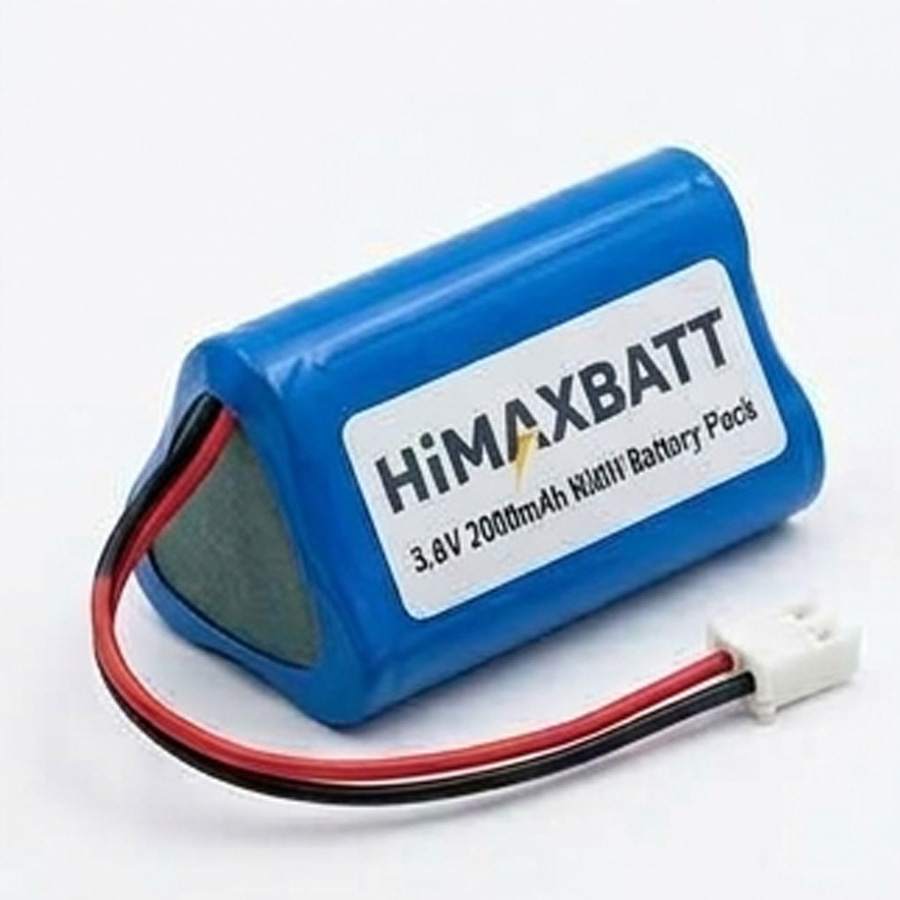
For equipment that uses proprietary batteries, follow the manufacturer’s specified battery model and charging requirements. Cells with similar dimensions may still have different voltages, protection designs, and discharge characteristics, so they should not be substituted based on physical size alone.
Check the Voltage: A Battery Labeled “12V” Is Not Automatically Compatible
A battery’s nominal voltage is used for classification and calculations, while its actual output voltage changes with state of charge, load, and temperature.
For example, a four-series LiFePO4 battery pack is typically rated at 12.8V, and some products use a charge termination voltage of 14.6V. A common three-series lithium-ion battery pack may be rated at 10.8V or 11.1V and reach 12.6V when fully charged if it uses a 4.2V-per-cell charging system. These figures are provided to illustrate the differences; always refer to the specifications of the actual product.
When selecting a battery, check three things:
- Does the battery’s fully charged voltage exceed the device’s maximum allowable input voltage?
- As the battery discharges, will its voltage fall below the device’s minimum operating voltage?
- Are the connector polarity, physical connection, and power requirements compatible?
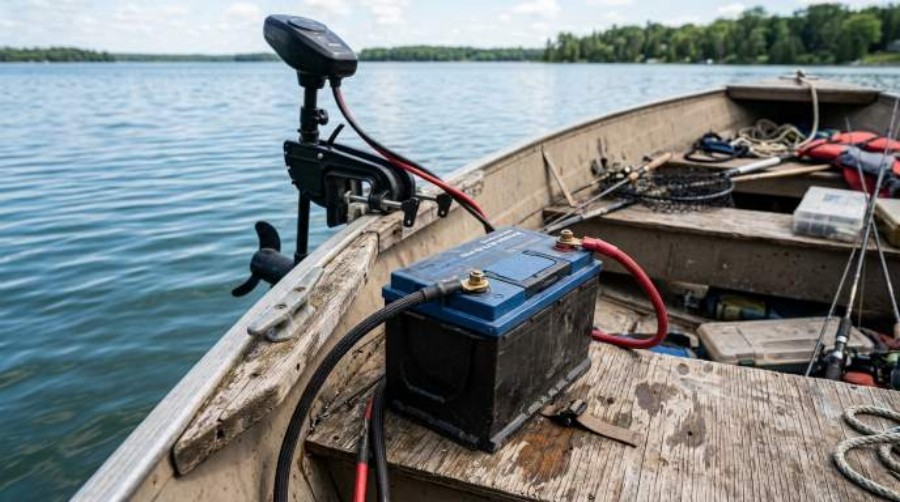
Trolling motors may use 12V, 24V, or 36V systems and should be matched according to the specific motor model. Some motors also have specific operating requirements for lithium batteries, so compatibility should not be determined from the voltage label alone.
What Battery Capacity Do You Need for Fishing and Hunting Gear?
Use Watt-Hours to Compare Stored Energy
Amp-hours represent charge capacity, while watt-hours are more useful for comparing the amount of energy stored in batteries with different voltages.
Nominal Battery Energy (Wh) ≈ Nominal Voltage (V) × Capacity (Ah)
For example:
- A 12.8V, 20Ah battery has approximately 256Wh of nominal energy.
- A 25.6V, 20Ah battery has approximately 512Wh of nominal energy.
Both batteries are rated at 20Ah, but they store different amounts of nominal energy. The mAh rating shown on a power bank may also be based on the voltage of its internal cells, so it should not be compared directly with the Ah rating of a 12.8V battery.
Estimate Capacity Based on Actual Operating Time
A basic calculation is:
Device Energy Consumption (Wh) = Average Power (W) × Operating Time (h)
The following example represents a hypothetical fishing trip. The values in the table are for calculation purposes only and do not represent the actual power consumption of any specific product.
| Device | Assumed Average Power | Operating Time | Estimated Energy Consumption |
| Fish finder | 12W | 8 hours | 96Wh |
| Night fishing light | 8W | 4 hours | 32Wh |
| Other compatible DC equipment | 5W | 4 hours | 20Wh |
| Total | — | — | 148Wh |
You should also account for an energy reserve, the planned usable capacity, and conversion and wiring losses:
Required Nominal Energy ≈ Total Energy Consumption × Reserve Factor ÷ (Planned Usable Capacity Ratio × Power Delivery Efficiency)
Assuming a reserve factor of 1.2, a planned usable capacity of 80%, and a power delivery efficiency of 90%:
148 × 1.2 ÷ (0.8 × 0.9) ≈ 247Wh
For a 12.8V battery, this corresponds to approximately 19.3Ah, so a 20Ah or larger battery could be used as a starting point for evaluation. Additional capacity reserve may be appropriate if low temperatures are expected, the trip may run longer than planned, or the battery has already been in service for an extended period.
The 80% and 90% figures above are example assumptions, not fixed values for all batteries. Actual runtime should be verified based on product test conditions and testing with the complete system.
For trail cameras, energy consumption should be estimated separately for standby operation, image capture, infrared illumination, and wireless transmission. Calculating from standby power alone can underestimate battery requirements when the camera is triggered frequently.
Choosing a Trolling Motor Battery: Look Beyond Capacity to Current
Ah indicates how much charge a battery can store, while A indicates the amount of current it can deliver. These two specifications should not be confused.
Suppose a trolling motor requires 50A of continuous current during operation, but the battery is rated for only 30A of continuous discharge. Even if the battery has a capacity of 100Ah, it may still trigger protection or experience abnormal heating.
From a manufacturing and system-matching perspective, verify all of the following:
- Cell output capability:Can the cells support the load across the specified temperature and state-of-charge range?
- BMS continuous current:Does it meet the equipment’s continuous operating requirements?
- Peak current and duration:Can the battery support startup loads or sudden changes in demand?
- Connectors and cable capacity:Are the terminals, cables, and internal interconnections rated for the required current?
- Protection coordination:Are the fuse or circuit breaker specifications appropriate for the equipment while also protecting the wiring?
A lithium battery needs sufficient continuous discharge capability. Otherwise, the system may shut down after operating for only a short period.
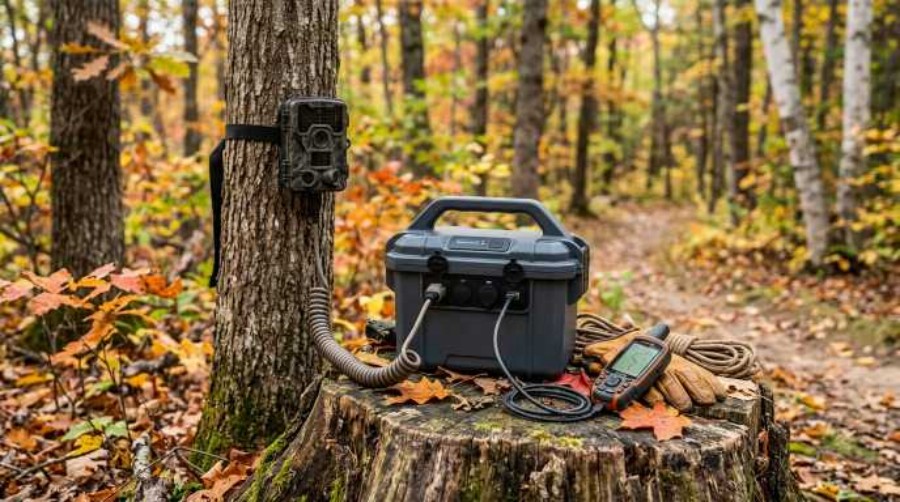
When a trolling motor and fish finder share the same power source, electrical interference may also occur. Whether separate power supplies, dedicated circuits, or filtering are required should be determined according to the equipment manufacturer’s installation requirements.
How Do You Choose Between LiFePO4, Other Lithium-Ion Batteries, and Lead-Acid Batteries?
LiFePO4 is itself a type of lithium-ion battery. For easier comparison, the table below lists it separately from lithium-ion batteries that use other common cathode chemistries, such as NMC.
| Battery Type | General Characteristics | Potential Applications |
| LiFePO4 battery | Typically offers good cycle durability and a relatively stable discharge-voltage profile | Fish finders, trolling motors, continuous lighting |
| Other lithium-ion batteries, such as NMC | Typically offer higher gravimetric energy density, which can help reduce weight and size | Handheld equipment, portable devices, and custom battery packs with limited installation space |
| Deep-cycle lead-acid battery | May offer advantages in initial purchase cost and availability | Applications where weight is less important or where the existing system is designed for lead-acid batteries |
These are general characteristics. Actual product performance also depends on cell quality, pack design, operating temperature, and test conditions.
When comparing cycle life, consider depth of discharge, charge and discharge rates, ambient temperature, and the capacity-retention criterion used to define end of life. A cycle count without its test conditions provides limited value for meaningful comparison.
Cold Temperatures, Water Protection, and Vibration Define the Limits of Outdoor Use
Evaluate Low-Temperature Discharging and Charging Separately
When fishing in winter or operating monitoring equipment in cold environments, battery internal resistance may increase, while available capacity and output capability may decrease.
More importantly, a battery that can discharge at a certain low temperature may not necessarily be charged at that same temperature. Charging lithium-ion batteries at low temperatures can create a risk of lithium plating, so the temperature and current limits specified for the cells and battery pack should be followed.
Charging-temperature limits vary by product. For example, the manual for one Victron Lithium Smart battery specifies an allowable charging temperature range of +5°C to +50°C. This range should not be applied universally to other battery models.
For winter applications, check whether the battery includes low-temperature charging protection. If a self-heating battery is used, also verify the heating activation conditions, power source, and additional energy consumption.
Water Protection Depends on the Complete Installation
When evaluating battery protection for outdoor use, consider the enclosure, connectors, cable exits, seals, and installation location. An IP rating applies to specified test conditions and does not automatically indicate resistance to salt spray, corrosion, or prolonged immersion.
For boat fishing applications, connector corrosion and vessel vibration should also be considered. The battery should be securely mounted, and terminals should be protected from accidental contact with metal objects. Cleaning and inspection procedures should follow the product manual.
How Should Chargers and Solar Recharging Be Matched to the Battery?
The charger should match the battery chemistry, number of cells in series, charging voltage, and allowable charging current. A charger originally designed for a lead-acid battery should not be used with a lithium battery simply because both are labeled “12V.” Some equalization or repair modes may not be suitable for the lithium battery pack.
When using solar power for recharging, the battery should be connected through a compatible solar charge controller or power device with the appropriate charging function. Solar panel nominal voltage alone is not enough to determine compatibility.
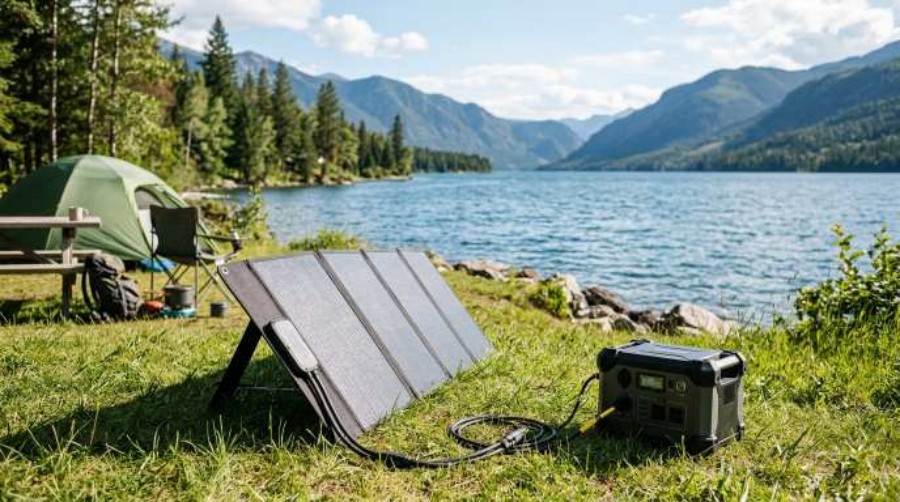
A solar panel’s rated power also does not mean it will produce that output continuously throughout the day. Shade, cloud cover, installation angle, and conversion losses all affect the amount of energy available for recharging. For multi-day trips, runtime should be calculated based on actual daily energy consumption and expected solar generation at the location.
From a Battery Manufacturing Perspective, What Information Should You Verify Before Purchasing?
A useful battery specification should include as much of the following information as possible:
| Specification or Documentation | Primary Purpose |
| Nominal voltage, charge termination voltage, and discharge cutoff conditions | Determine equipment and charger compatibility |
| Rated capacity, energy, and capacity test conditions | Estimate runtime and compare products |
| Continuous discharge current, peak current, and peak duration | Determine load compatibility |
| Charge/discharge temperature ranges and protection logic | Evaluate low- and high-temperature operating limits |
| Dimensions, weight, connector, and polarity | Confirm mechanical and electrical installation |
| IP rating and supporting test documentation | Evaluate environmental suitability |
| Cycle-life test conditions and warranty terms | Evaluate long-term operating costs |
For custom projects, samples can also be tested with the complete equipment under load and evaluated for temperature rise, runtime, vibration, and relevant environmental conditions. Compared with reviewing cell specifications alone, these tests more closely represent actual outdoor use.
Frequently Asked Questions
How Long Will a 12V 10Ah Battery Run a Fish Finder?
You need to know the battery’s actual nominal voltage and the fish finder’s average power consumption. For example, a 12.8V, 10Ah battery has approximately 128Wh of nominal energy. If the fish finder consumes an average of 10W, and you assume 80% planned usable capacity and 90% power delivery efficiency, estimated runtime would be:
128 × 0.8 × 0.9 ÷ 10 ≈ 9.2 hours.
This is only a calculation example. Screen brightness, sonar operating mode, low temperatures, and battery ageing can all affect actual runtime.
Can a LiFePO4 Battery Directly Replace a Lead-Acid Battery on a Fishing Boat?
First, verify the equipment’s input voltage, charging system, continuous-current requirements, mounting configuration, and manufacturer requirements. If the existing system charges the battery from the engine, the charging equipment and protection configuration should also be evaluated. The battery should not be treated as a direct replacement based on capacity alone.
Can Two 12V Lithium Batteries Be Connected in Series for a 24V System?
Only if the battery manufacturer explicitly allows that series configuration. The batteries must also meet requirements for model, capacity, state of charge, and BMS design, and a compatible charging solution must be used. Battery packs that are not designed for series connection should not be connected in series.
If the Battery Has a BMS, Do I Still Need a Fuse?
In most systems, external circuit protection is still required according to the system design. The BMS primarily monitors and protects the battery, while an external fuse or circuit breaker protects wiring and the broader electrical system from faults. The appropriate rating should be determined based on cable ampacity, equipment current, and the manufacturer’s installation requirements.
Can a Trail Camera Use a Rechargeable Lithium Battery That Is the Same Size as Its Original Battery?
Physical size alone is not enough to determine compatibility. For example, a 14500 lithium-ion cell is similar in size to an AA battery, but its voltage may be significantly different. Check the camera manual for the permitted battery chemistry, voltage, and external power specifications.
How Should a Battery Be Stored When It Will Not Be Used for a Long Time?
Follow the product manual for the recommended storage state of charge and temperature, and inspect the battery periodically. Equipment standby loads and the BMS itself may continue to consume a small amount of energy, so a stored battery should not be assumed to have zero power consumption.
HiMAXBATT: Battery Solutions Designed Around Real Equipment Requirements
HiMAXBATT provides OEM/ODM services for LiFePO4 batteries, lithium-ion batteries, and other rechargeable battery packs, with solutions evaluated around the voltage, capacity, dimensions, connectors, and BMS functions required by the equipment. For fishing gear, outdoor lighting, and wildlife monitoring equipment, battery selection should begin with the actual load, operating time, and environmental conditions, followed by sample and complete-system testing to verify compatibility.