| Commercial Summary: Generally, HiMAXBATT does not derive revenue from its articles; the editorial viewpoints expressed therein are our own and are published independently. We are a manufacturer of lithium batteries. |
Key Takeaways
- Power Consumption: Starlink models have different power requirements. Battery sizing depends on actual wattage and daily usage.
- Battery Selection: LiFePO4 batteries offer long cycle life and are well-suited for RV applications when paired with a compatible BMS.
- DC Power: A properly matched DC-DC converter can reduce energy losses associated with AC inverters.
- Solar Charging: Solar panel sizing depends on daily energy consumption, local sunlight conditions, and system efficiency.
- System Planning: Battery capacity, charging equipment, electrical protection, and backup power should be designed together.
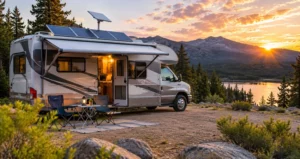
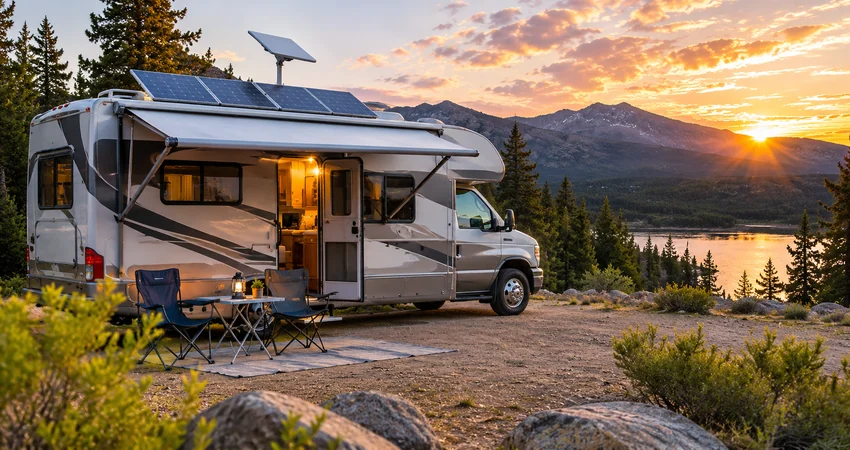
As Starlink satellite internet becomes increasingly popular among RV travelers across the United States, more campers and remote workers want to stay connected without relying on campground hookups or shore power. However, Starlink requires a continuous power supply, and an RV’s existing battery system may not have enough capacity to support extended internet use.
Combining LiFePO4 lithium batteries, 12V/24V DC power systems, and solar charging equipment can help RV owners build a more reliable off-grid power setup. This guide explains Starlink power consumption, battery sizing, DC power options, and solar system configurations from a battery manufacturing and system integration perspective.
Why Do RV Owners Need a Reliable Starlink Off-Grid Power System?
RV travelers in the United States often camp near national parks, in remote campgrounds, or at boondocking locations without electrical hookups. In these situations, Starlink typically relies on the RV’s house battery system for power.
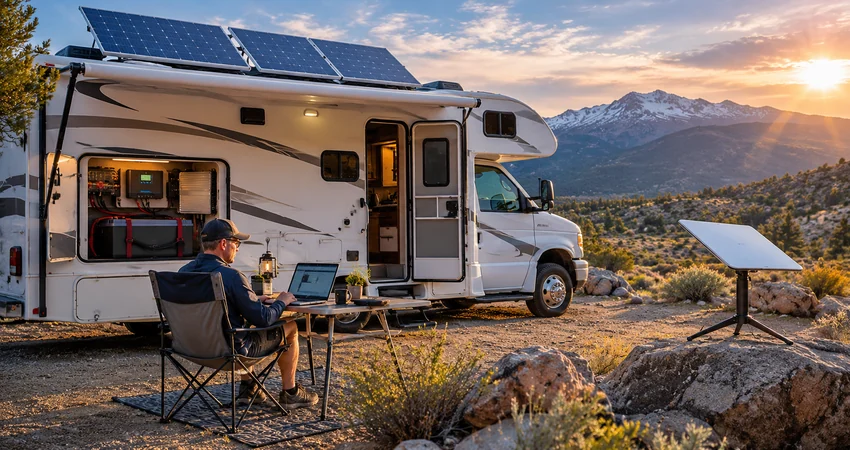
Unlike lights or other devices used occasionally, Starlink may run continuously for several hours. For RV owners who attend video meetings, work remotely, or spend extended periods off-grid, maintaining an internet connection adds a significant load to their daily energy consumption.
Traditional lead-acid batteries have limitations related to weight, usable capacity, and deep discharge performance. In comparison, a properly configured LiFePO4 battery system can provide a higher percentage of usable energy and support frequent charging and discharging.
How Much Power Does Starlink Actually Use in an RV?
Starlink power consumption varies depending on the model, network activity, ambient temperature, and operating conditions. Before selecting a battery, RV owners should identify their equipment’s typical power requirements and estimate daily energy use.
| Starlink Model | Typical Power Consumption | Energy Used in 8 Hours |
| Starlink Mini | 25–40W | 200–320Wh |
| Starlink Standard | 75–100W | 600–800Wh |
Note: These are reference power ranges. Actual consumption depends on the hardware version, official specifications, and operating conditions. External power conversion losses are not included.
Use the following formula to calculate daily energy consumption:
Daily Energy Consumption (Wh) = Average Power (W) × Operating Time (Hours)
For example, a Starlink Mini averaging 40W consumes approximately 480Wh when operated for 12 hours per day. Running the same device continuously for 24 hours requires approximately 960Wh.
Cold-weather heating functions, changing network activity, and additional connected equipment can also affect overall power requirements. For this reason, RV owners should not size their batteries based solely on a device’s advertised wattage.
How Do You Calculate the Right LiFePO4 Battery Capacity for Starlink?
Choosing a LiFePO4 battery for Starlink requires evaluating daily energy consumption, nominal battery voltage, usable capacity, and power conversion losses.
The basic battery sizing formula is:
Battery Capacity (Ah) = Daily Energy Consumption (Wh) ÷ [Nominal Battery Voltage (V) × Usable Capacity Factor × Power Efficiency]
For a 12.8V LiFePO4 battery, assuming 90% usable capacity and 90% power conversion efficiency, the estimated battery requirements are:
| Daily Energy Consumption | Calculated Battery Capacity | Suggested Battery Capacity |
| 320Wh | Approximately 31Ah | 50Ah |
| 480Wh | Approximately 46Ah | 50–100Ah |
| 800Wh | Approximately 77Ah | 100Ah |
| 960Wh | Approximately 93Ah | 100–150Ah |
These estimates cover only the Starlink load. They do not include refrigerators, lighting, water pumps, or other RV appliances. Actual battery sizing should also account for cloudy weather, extended off-grid stays, and capacity changes as batteries age.
From a battery manufacturing perspective, LiFePO4 chemistry offers cycle life, thermal stability, and discharge characteristics suitable for many RV energy storage applications. However, each battery pack needs a properly matched battery management system (BMS), along with appropriate low-temperature charging protection, overcurrent protection, and temperature monitoring.
According to Battery University’s technical overview of lithium-ion battery chemistries and LiFePO4 characteristics, lithium iron phosphate batteries offer favorable thermal stability and cycle life. However, temperature conditions still affect battery performance and storage behavior. Therefore, battery selection should consider operating conditions and protection features rather than comparing amp-hour ratings alone.
Should You Power Starlink With 12V/24V DC or an AC Inverter?
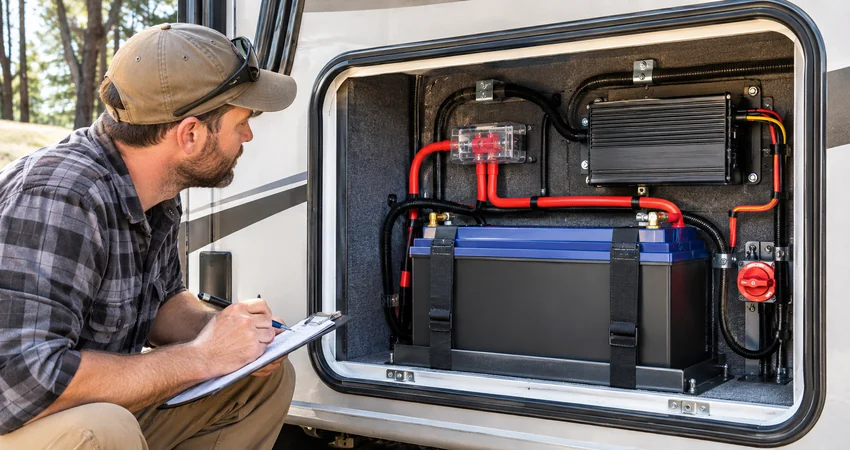
Most RV electrical systems use 12V or 24V house batteries, while Starlink equipment may require a specific DC input or an AC power adapter. The appropriate power configuration depends on the hardware model.
| Power Method | Main Characteristics | Suitable Applications |
| DC-DC Power | Reduces AC conversion stages but requires voltage compatibility | Devices supporting the required DC input |
| AC Inverter | Supports original AC adapters but introduces conversion losses | Devices designed for AC-powered adapters |
| USB-C PD Power | Convenient connection but requires compatible voltage, wattage, and protocol | Devices supporting the appropriate USB-C PD configuration |
For example, Starlink Mini supports a specified DC input range of 12–48V, with a 60W power input rating. When using the designated USB-C adapter cable, the power source must support 100W USB Power Delivery at 20V/5A.
Keep in mind that an RV’s 12V battery does not maintain a constant terminal voltage. Its voltage changes throughout charging and discharging. Even if a device supports nominal 12V input, users should verify cable length, voltage drop, connector polarity, and connection specifications.
Different versions of Starlink Standard may have different power requirements, so the Starlink Mini DC power configuration should not automatically be applied to Standard hardware.
How Much Solar Power Do You Need to Run Starlink in an RV?
An RV solar charging system typically includes solar panels, an MPPT charge controller, a LiFePO4 battery, and the appropriate power delivery equipment. Solar panels generate electricity during daylight hours, while the battery stores energy for nighttime use or cloudy conditions.
Use the following formula to estimate solar panel requirements:
Solar Panel Wattage (W) = Daily Energy Requirement (Wh) ÷ [Peak Sun Hours × Overall System Efficiency]
Assuming four peak sun hours per day and 75% overall system efficiency, estimated daily solar energy production would be:
| Solar Panel Capacity | Estimated Daily Energy Production | Suitable Applications |
| 100W | 300Wh | Short periods of Starlink Mini use |
| 200W | 600Wh | Moderate daily Starlink Mini use |
| 400W | 1,200Wh | Extended internet use and some additional loads |
These figures are illustrative calculations rather than guaranteed daily production. Solar output varies across the United States due to regional sunlight conditions, seasonal changes, shading, and panel orientation.
RV owners can use the National Renewable Energy Laboratory’s PVWatts solar energy production calculator to estimate photovoltaic output based on location and system specifications. These estimates can then be compared with actual daily energy requirements to determine an appropriate solar array size.
For extended off-grid RV travel, battery storage should also be sized to account for periods of limited sunlight rather than relying exclusively on solar production during clear weather.
Three Common Starlink Off-Grid Power Setups for RVs
RV owners have different internet usage patterns, equipment requirements, and power demands. Therefore, Starlink power systems should be configured around the intended application.
| RV Usage Scenario | Recommended Battery Configuration | Solar Panel Capacity | Power Delivery Method |
| Weekend Camping | 12.8V 50Ah LiFePO4 | 100–200W | Compatible DC power |
| Extended Road Trips | 12.8V 100Ah LiFePO4 | 200–400W | DC-DC converter or inverter |
| Full-Time Off-Grid Remote Work | 12.8V 200Ah or 25.6V 100Ah LiFePO4 | 400–600W | Based on equipment requirements |
Weekend Camping Setup: This configuration is suitable for RV owners using Starlink Mini for several hours each day. The primary considerations are portability, installation convenience, and moderate energy consumption.
Extended Road Trip Setup: This option supports travelers who need internet access for navigation, video meetings, and everyday communication. A 100Ah battery provides additional stored energy, but the required capacity must be recalculated when refrigerators and other appliances share the system.
Full-Time Off-Grid Remote Work Setup: This configuration is intended for RV owners who need extended internet connectivity. Larger battery capacity provides additional energy reserves, while solar charging, alternator charging, or other backup power sources can help maintain operation.
These configurations are general reference examples, not guaranteed runtime estimates. RV owners running Starlink Standard continuously should recalculate their battery and solar requirements based on measured power consumption, expected cloudy days, and all connected RV loads.
What Safety Precautions Matter When Installing a Starlink RV Power System?
RVs experience vibration, temperature fluctuations, and limited installation space. As a result, battery installations must address both mechanical stability and electrical protection.
First, LiFePO4 batteries should include a BMS with overcharge, overdischarge, overcurrent, short-circuit, and temperature protection. In colder regions, low-temperature charging protection is particularly important to prevent charging outside the battery cells’ permitted temperature range.
Second, fuses or circuit breakers should be selected according to circuit requirements and wire current-carrying capacity. Wire gauge should be determined based on operating current, cable length, and acceptable voltage drop.
Batteries should also be securely mounted away from standing water, excessive heat, and continuous mechanical impact. Modifications involving an RV’s existing electrical distribution system should be performed by qualified professionals familiar with RV electrical installations.
How Can You Reduce Starlink Power Consumption and Extend Off-Grid Runtime?
Reducing unnecessary electricity consumption can lower the amount of battery storage and solar capacity required.
RV owners who do not need continuous internet access can turn off Starlink overnight or while away from the vehicle. This prevents the equipment from consuming energy when connectivity is unnecessary.
Where compatible, a properly designed DC power solution may also reduce energy losses associated with AC inversion. However, actual efficiency improvements depend on converter performance, wiring losses, and operating conditions.
Users should regularly monitor battery state of charge (SOC), manage refrigerator and lighting usage, and avoid unnecessary simultaneous operation of high-demand electrical equipment.
Frequently Asked Questions About Starlink RV Off-Grid Power
Can Starlink Mini Connect Directly to a 12V RV Battery?
Starlink Mini supports a specified DC input voltage range, but a nominal 12V battery rating alone does not guarantee compatibility. Users must verify actual battery voltage, cable specifications, connector polarity, and voltage drop. Power accessories that meet the device’s requirements should be used.
Can You Use Starlink While Driving an RV?
This depends on the Starlink hardware, mounting configuration, service plan, and applicable usage requirements. Having a power system that operates while driving does not automatically mean the equipment is approved for in-motion use. RV owners should review the current official requirements.
How Can You Keep Starlink Running During Cloudy or Rainy Weather?
Additional battery storage, compatible alternator charging, shore power charging, or backup generators can help maintain internet connectivity when solar production is insufficient. Appropriate charge control equipment should manage the different power inputs.
Can Starlink Share an RV‘s Existing House Battery System?
Yes, provided the total electrical load, battery capacity, and wiring limits have been evaluated. Batteries with different chemistries or operating conditions should not be connected in parallel without proper technical assessment.
How Should You Maintain a StarlinkRV Battery During Long-Term Storage?
Before storing an RV for an extended period, adjust the battery’s state of charge according to the manufacturer’s recommendations, disconnect unnecessary loads, and periodically inspect battery condition. Storage locations should avoid prolonged exposure to high temperatures, moisture, and temperatures outside the battery’s specified limits.
HiMAXBATT: Custom Lithium Battery Solutions for Starlink RV Power Systems
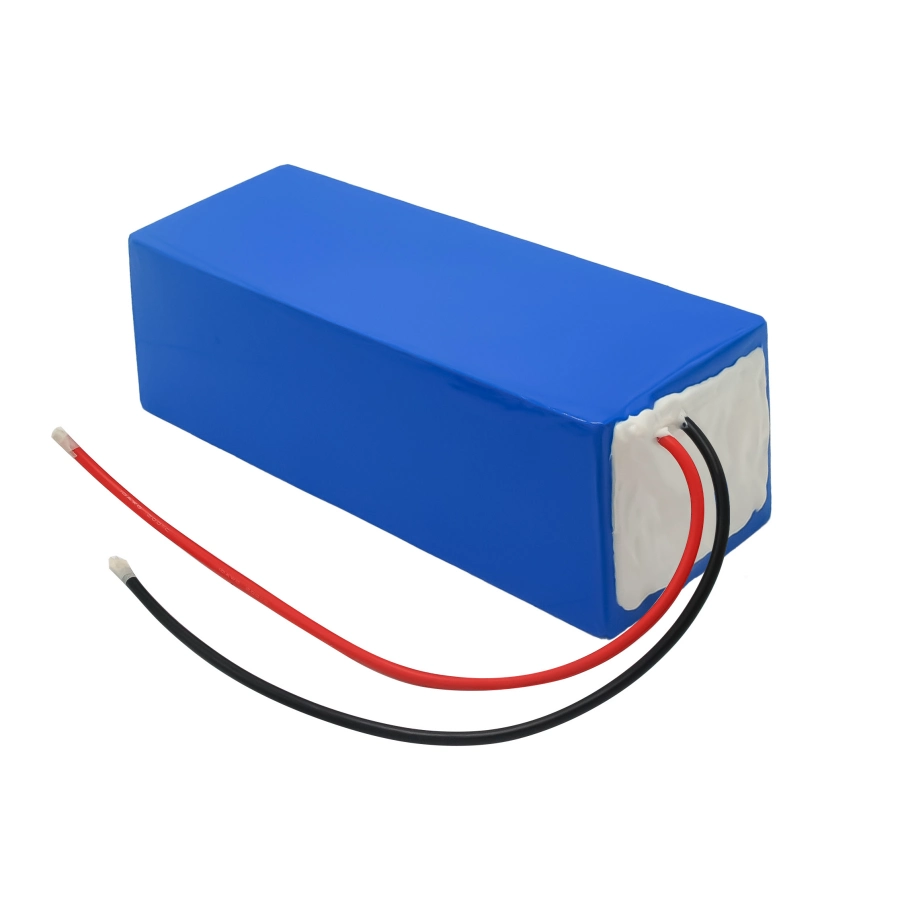
HiMAXBATT specializes in lithium batteries and custom battery pack solutions, offering 12V/24V LiFePO4 battery packs and OEM/ODM customization services tailored to the needs of RV manufacturers, conversion companies, and off-grid power system integrators. For Starlink off-grid power applications, HiMAXBATT can develop battery solutions based on capacity requirements, BMS protection, physical dimensions, connection methods, and operating environments, helping customers build energy storage systems compatible with their RV electrical configurations.